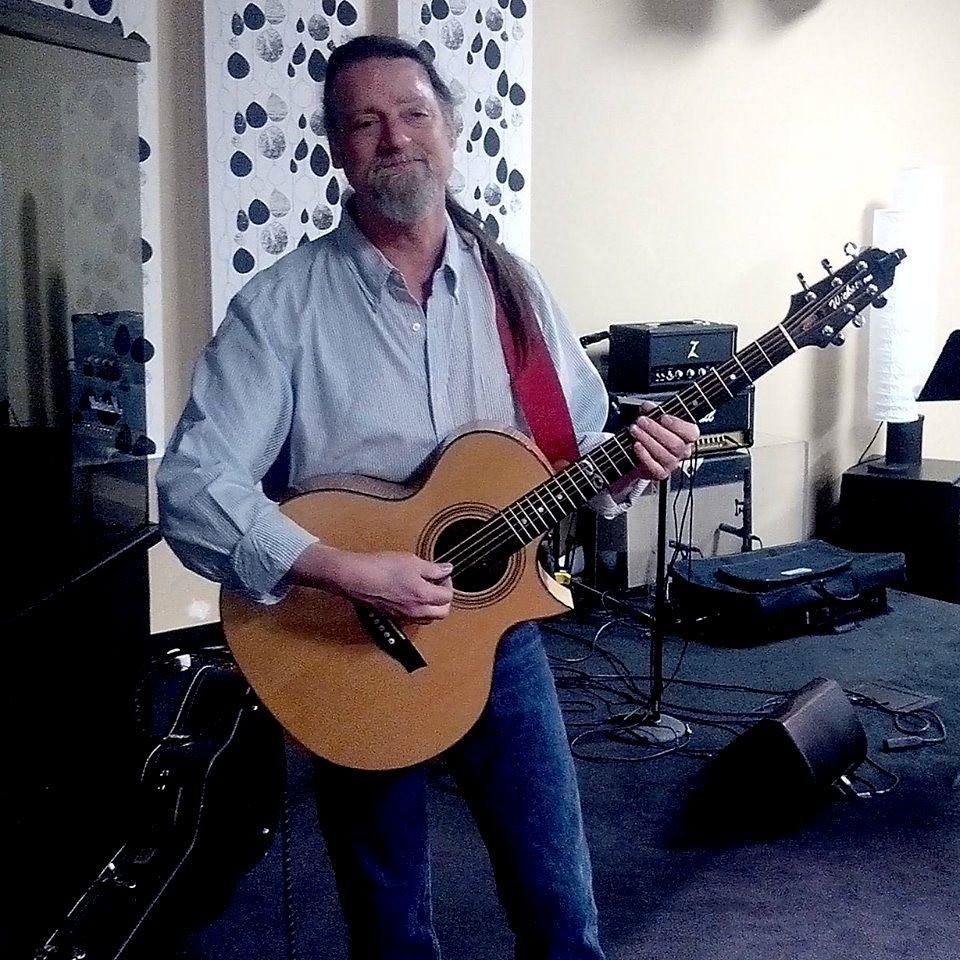




Fletcher Music Services

  • Hillsboro, OR 97124 (map)
  • (503) 998-0774

Credentials (view details)

  • DOJ Smart Search verified
  • Email verified
  • Thumbtack reviewed
  • Thumbtack Elite member

Guitar & Bass Lessons

Request a quote

Fletcher Music ServicesHillsboro, OR$40 per hour

  1. You'll be asked a few quick questions that will help describe your needs.
  2. You'll be asked to provide your contact information so that Geoff Arnold will be able to get in touch with you.
  3. You'll have the option to get competing quotes from other qualified service professionals, saving you time and money.
Request free quote »

Summer Special: Four Lessons for the price of three! For new students only.

With over 35 years of professional experience as a touring and studio musician, I am versed in multiple styles including Rock, Blues, Acoustic and Finger Style, Worship (CCM), R&B, Funk, and Jazz.

I've been teaching for over twenty-five years, and have created a huge body of material to draw from to help you achieve the success you desire in learning to play, for the first time - or in improving your current skill to a higher level of ability.

How far you want to go is up to you. My rate is $40.00 per hour. For a sample of my musical ability go to the URL given elsewhere in this post. It demonstrates finger picking, chord knowledge and arpeggios.

Write a review

Question and answer

Q. What advice do you have for a customer looking to hire a provider like you?

A. Shop around. Not all people who claim to be instructors are good teachers. A good teacher learns their craft, and must be committed to the process involved in learning to listen as much as to impart information and knowledge. A good instructor is always learning, too, and has a passion to share their knowledge. Someone who is teaching for some extra income might share these qualities, but more often than not, since it is part time, they don't have the time to devote to the discipline. So don't be afraid to try different instructors for a lesson each. Compatibility is part of the learning experience. You want to have fun; that's why you're learning to play music. Remember that as you go about choosing an instructor.

Q. What questions should a consumer ask to hire the right service professional?

A. This is an important task because people often don't know what to ask a music teacher. So, here are a few things you should ask any and all teachers:

1) How long have you been playing this instrument?
2) Do you teach full time or part time?
3) How long have you been teaching?
4) What source material will you use to teach the instrument?

Asking these specific questions will help you learn much of what you need to know to make an informed decision about whether to give that teacher a chance. You still have to recognize that a teacher may be very good at playing, but not good at teaching.

Also, recognize that they may also be a good teacher, but the "chemistry" between teacher and student is an important factor in the learning experience. If you get on well, lessons will most likely go well, too. If you don't really get on well, you have to decide if the incompatibility is worth dealing with, to continue with that teacher. Don't be afraid to try out a few teachers before finally deciding on who you will choose in the end.

Q. Why does your work stand out from others who do what you do?

A. With over twenty-five years teaching guitar and bass, added to the fact that I have over 35 years professional touring and studio experience, I have gone through every scenario imaginable, every trouble, every challenge, and so understand how things are done, how to solve problems, what works and what doesn't work.

Q. What do you like most about your job?

A. Creativity is a wonderful gift and I use it and share it, teach it and nurture it in everyone around me.

Q. What questions do customers most commonly ask you? What's your answer?

A. Questions are generally regarding technique, how to do a certain kind of lick or rhythm, sometimes song related questions and scales & theory. The variety can be quite broad.

Q. What do you wish customers knew about you or your profession?

A. Not everyone is a teacher. You can show someone something, and they can learn to play it, sure. But to actually teach them why things work the way they do, why these sounds work together...or don't work together, requires an understanding beyond simply being able to play music.

Teaching also doesn't stop at the end of the lesson. Teachers spend an average of one to three hours per student in preparation for a lesson, making sure the material is well constructed and easy to understand.

Cheap lessons does not always mean poor teacher - but it can. Many good teachers keep their rates artificially low because if they charged what their experience reflected, lessons for music would average 75 to 100 dollars an hour or more. Something to bear in mind.

Teaching music is a profession like any other. And as with any profession, you will encounter teachers who are good and those who are not very good at what they do.

Q. Do you do any sort of continuing education to stay up on the latest developments in your field?

A. The passion to play fuels my desire to continue learning. You can never know it all. It is a life long passion for me. Music is such a deep field of study spanning the whole of human existence. I am a multi-instrumentalist, playing not just the guitar and bass, but piano, mandolin and the drum kit as well. All instruments were learned while still young and I try to continue improving in each as I am able.

Q. Describe your most recent project, what it involved, how much it cost, and how long it took.

A. I'm currently producing a record for a vocalist. We've been sitting down and choosing the material he'll be singing and working out arrangements for the musicians to follow during the recording process. This involves finding the right key for each song, to make the singer sound great, to help him shine on each track. The cost is not set, though most recording projects have a budget. We expect this project to take about six to nine months, so figure that it will be done by January 2013.

Q. If you were advising someone who wanted to get into your profession, what would you suggest?

A. Music is a hard business. You had better not be pursuing it for fame and fortune. Less than 1% of musicians in the business actually attain either.

You better love music enough to be willing to sacrifice a lot in the early years because you will have to travel all the time, work for pay well below what you might be worth and learn to save money for the lean times.

And drugs are absolutely the best way to destroy your career. They will mess you up, betray you and ruin your reputation. And a ruined reputation takes years to turn around, years that could have been better spent staying sober and clean and learning to be a better player, and so qualifying for better gigs...and better pay...and the occasional day off.

Q. What is your greatest strength?

A. I suppose my greatest strength is my commitment to my craft - music. It is all I do, professionally, not because it is easy, but because it is challenging. As a teacher and a performer, I am committed to excellence, whether teaching a person new to the instrument, or music in general, or helping long time players find new inspiriation and motivation, or in composing original music to perform. To me, it is all connected. To teach is to be constantly learning myself; to compose is to apply what I know, and to push the limits of that knowledge, even beyond what I understand, and so continue to push the boundaries of my knowledge to include more than I knew yesterday.

Facebook Twitter Email