How to use plumber’s tape (it's easier than you think)
By Kristy Snyder•Last updated Jan 26, 2024
Last updated Jan 26, 2024
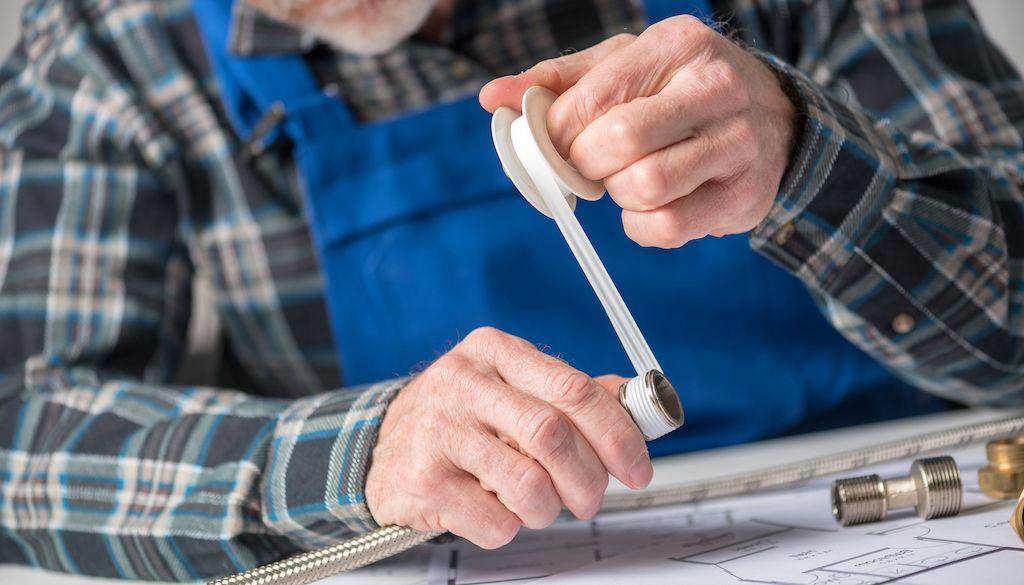
Plumber's tape is an essential plumbing tool for connecting two threaded pipes. This simple product creates a watertight seal so you don't end up with a mess on your hands. But it's not as simple as slapping it on and calling it a day.
We'll teach you exactly how to use plumber's tape so your next DIY project goes off without a hitch.
What is plumber’s tape?
Plumber's tape, also known as thread sealing tape or Teflon tape, is a thin tape used to create a watertight seal on threaded pipe connections. It's made of a fluoropolymer called polytetrafluoroethylene (PTFE), which is commonly used in non-stick pans. The tape fills the gaps between pipe threads, helping prevent leaks.

PTFE tape is usually color-coded so you know how it's meant to be used. Here's a quick guide to what the different colors mean:
- White plumber's tape: Any standard plumbing job involving water lines.
- Yellow plumber's tape: Gas lines, including propane, butane, or natural gas.
- Green plumber's tape: Oxygen lines that require an oil- and grease-free construction.
- Gray plumber's tape: Stainless steel pipes; has a higher density.
- Red plumber's tape: Pipes with a diameter of 1/2 to 2 inches with larger joints.
For DIY purposes, you might use plumber's tape when installing a new shower head or completing a pipe-to-valve connection. If that sounds a little daunting, remember that you can always call in a professional plumber to handle the dirty work for you.
Plumber's tape is also a good quick fix for a leak until a plumber can come and assess the situation.
How to use plumber’s tape
Applying Teflon tape isn't hard, but you need to know what you're doing. Follow these steps to learn how to use plumber's tape:
Step 1: Clean the pipe fittings
Make sure the threads at the end of both pipes are as clean and dry as possible. Wipe them off with a dry rag to remove debris or oil that might keep the tape from sticking well.
Step 2: Check the direction of the threads
One pro tip for putting on plumber's tape: Always wrap it in the direction of the threads. If you wrap it in the opposite direction, it won't be secure. Double-check by screwing the pipes together to see how they join.
Step 3: Wrap the tape
Now comes the tricky part — actually wrapping the tape. Start the tape on the second thread from the end of the pipe. Make sure the tape lies flat, and wrap it tightly. Keep wrapping about four to six times around the threads, making sure to leave the first thread uncovered.
Step 4: Cut the tape
Once you're done wrapping, cut the tape — you can also rip it easily if you don't have scissors. Make sure the loose end is smoothed down and secure.
Now you have a thread seal that's ready to connect to your pipe joints.
When should you not use plumber’s tape?
Plumber's tape isn't suitable for all plumbing connections. In general, avoid using plumber's tape if:
- A pipe has wide threads. In these cases, the tape may not adhere well, causing water to dribble through.
- The pipes are too small, damaged, or worn. You will have a hard time applying the tape securely.
- You have nonmetal pipes. PTFE tape is meant for metal pipes only. That means you really shouldn't use it with PVC, as it can add strain to the pipes and cause them to fail. If Teflon tape isn't the right fit for your PVC project, you may be able to use a pipe joint compound instead. It's a glue-like paste you can apply to threaded pipes to create a strong seal without the hassle of tape.
- It's a compression fitting. These are already designed to seal tightly, so adding tape would prevent them from tightening correctly.
How many times do you wrap plumber’s tape?
Ideally, you should wrap your plumber's tape about five times around the threaded pipe. You can give or take a wrap based on whether you have adequate coverage or need to go a little further.
It's likely not a good idea to deviate much further than that, however. Too few wraps might mean you don't have a secure enough seal. Too many wraps could mean the tape is too thick and won't allow the pipes to fit together.
When to hire a plumber to fix your pipes
While you can use plumber's tape for small things like installing a new shower head, you should probably leave installing new pipes and plumbing to the professionals.
Thumbtack is here to help. We've curated all of the top plumbers in your area to make it easy to find your next contractor. Download the app now to start getting estimates from plumbers in your area.
FAQs
Does plumber’s tape stop leaks?
Yes, plumber's tape can permanently stop leaks in some situations. However, it's not a solution to every problem. If you're experiencing a leak, we recommend using plumber's tape to slow down the dripping. Then, call a plumber to investigate further.
Can you apply plumber’s tape when wet?
You can apply plumber's tape on wet threads, but it's not recommended. The tape may still seal the pipe, but it won't last as long as if you had done it when dry.
How it works.

Search.
Browse profiles, see prices and use filters to find pros who match your project.

Chat.
Contact the pros you like to discuss project details.

Hire.
Check pro availability and book appointments right in the app.
Find local pros for your project
Tell us what you're looking for and we'll show you pros right for the job, with prices.