Induction stove vs. electric – which one should you get?
By Francesca Singer•Last updated Oct 20, 2023
Last updated Oct 20, 2023
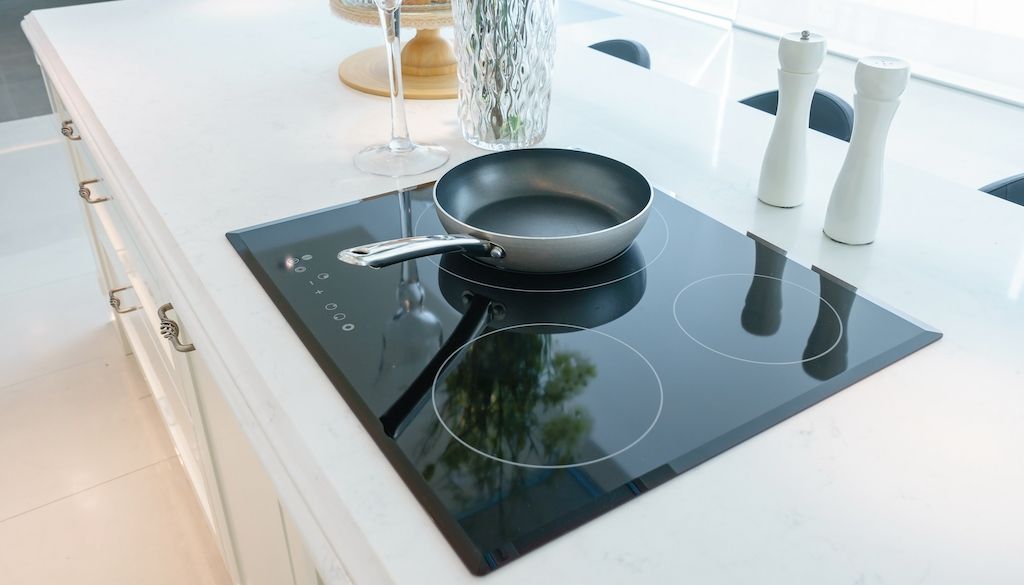
If you've considered upgrading your cooktop or range, you might have heard about the efficiency of induction stoves. But how do they compare to their electric counterparts?
We're here to offer a little guidance to help you decide on the best fit for your kitchen. Read on for a full breakdown of the differences between induction stoves and electric stoves.
Induction vs. electric stove comparison chart
Let's start by comparing these two stove types across several factors:
| Induction cooktops | Electric cooktops | |
|---|---|---|
| Cost | Higher unit costs | Lower unit costs |
| Energy efficiency | More efficient than electric and gas | Less efficient than induction |
| Cookware compatibility | Requires ferrous cookware, like cast iron or stainless steel | Any cookware can be used, such as aluminum, copper, and glass |
| Ease of cleaning | Easier to clean due to less burned-on residue | Cleaning is more difficult because food spills burn on |
| Noise | May buzz at the highest settings | Silent |
| Residual heat | Almost none; the cooktop is usually cool to the touch | Cooktop gets hot and stays hot for a long time, also heating the room |
| Installation difficulty | Easy to install but may require a dedicated circuit | Easy to install |
Induction stove overview

Unlike electric stoves, which heat cookware with an electric element, induction stoves use a magnetic field to generate heat directly in the pot or pan. Here are some key points to consider:
Pros
- Energy efficient: Induction cooktops heat up faster and are 5%-10% more efficient than traditional electric stoves (and three times more efficient than gas stoves).
- Instant heat: Induction stoves offer precise temperature control and quicker heating, which can make cooking faster and more effective.
- Safety: The glass-ceramic cooking surface stays cool to the touch, reducing the risk of burns.
- Easy to clean: Spilled food won't burn onto the surface, making cleanup a breeze.
- Cookware compatibility: Most stainless steel and cast-iron cookware work with an induction cooktop. You can test whether a pot or pan is compatible by seeing if a magnet sticks to the bottom.
Cons
- Cost: Induction ranges tend to be more expensive upfront. However, their efficiency may save you money in the long run.
- Special cookware: You may need to invest in compatible cookware if your current pots and pans aren't magnetic.
- Ease of installation: In some cases, it's necessary to install a dedicated circuit for an induction cooktop.
Electric stove overview

Electric stoves, unlike induction cookers, cook food by using a heating element. Let's explore their characteristics:
Pros
- Affordability: Electric ranges generally cost less upfront.
- Ease of installation: Traditional electric stoves are very easy to install, especially if you already have an existing electric cooktop.
- No special cookware required: Electric stoves work with standard pots and pans of any material.
Cons
- Slower heating: Electric stoves can take longer to heat up and cool down.
- Less precise: Temperature control is typically less precise with an electric stove than with induction.
- Residual heat: The cooktop can stay hot for a while after cooking, posing a burn risk, especially to children.
- Less energy efficient: In most cases, a conventional electric cooktop is less efficient than an induction counterpart.
Still can't decide? Take these steps
If you're still on the fence about which stove type to choose, the following steps can help you decide:
1. Consider the type of stove you currently have
If you're happy with your current stove, replace it with a newer and better model. But what if you don't know what kind of stove you have?
Look at your stove's surface. Induction stoves have a smooth, glass-ceramic top. Electric stoves usually have exposed coils or radiant elements.
Not 100% sure whether your glass-top stove is electric or induction? Does the surface heat up and stay hot after you turn a burner off? If so, you have an electric stove.
2. Evaluate your cooking style, beginning with your cooking habits
If you're an avid chef who values precise temperature control and efficiency, an induction stove might be the better choice. If you're on a budget, cook infrequently, and don't mind slower heating times, electric might be more suitable.
3. Check your cookware
Take a look at your existing pots and pans. If they're compatible with induction stoves — meaning a magnet sticks to the bottom — you're one step closer to making the switch.
Do you have expensive, non-compatible cookware that you love and don't want to part with? Stick with an electric stove.
4. Determine your budget
How much money are you willing to pay for a new stove? Once you've decided, research induction and electric stove prices. In most cases, induction stoves tend to cost more. However, their long-term energy efficiency may save you money in the long run.
5. Think about safety and convenience
Do you have young children, or are you concerned about burns? If so, an induction stove's cool-to-the-touch surface may be a smarter choice for your household.
Hire a pro to help you choose and install a new cooktop
Making a decision about an induction vs. an electric stove ultimately comes down to your cooking preferences, budget, and existing cookware. Both options have their merits, so weigh the pros and cons before you decide.
If you need help making a decision — and installing your new appliance — contact a pro near you. Download the Thumbtack app to see a list of top-rated appliance installation professionals in your area. Lean on their expertise when it comes to choosing an appliance and putting your stove together.
FAQs
What is the main difference between induction and electric stoves?
The primary difference is how they generate heat. Induction stoves use a magnetic field to heat cookware directly. Electric stoves use heating elements beneath the surface.
Can I use any pot or pan on an induction stove?
No, you need pots and pans that are compatible with induction cooking, which typically means they must be magnetic. You can easily test this with a magnet.
Are induction stoves more energy-efficient than electric stoves?
Yes, induction stoves are generally more energy-efficient because they heat the cookware directly, reducing heat loss.
Is it difficult to install an induction stove?
Installation difficulty can vary, but it's typically not terribly different from installing an electric range. However, you may need a dedicated electrical circuit.
Can I retrofit my kitchen for an induction stove if I currently have an electric stove?
It's possible to retrofit your kitchen with an induction stove. However, it may involve some electrical work and possibly upgrading your cookware. For electrical work, it's highly recommended that you hire an electrician.
Which type of stove is safer for households with children?
Induction stoves are generally safer for households with children. That's because the cooktop remains cool to the touch, reducing the risk of burns.
How it works.

Search.
Browse profiles, see prices and use filters to find pros who match your project.

Chat.
Contact the pros you like to discuss project details.

Hire.
Check pro availability and book appointments right in the app.
Find local pros for your project
Tell us what you're looking for and we'll show you pros right for the job, with prices.