Metal roof vs. shingles – which one should you choose?
By Richard Keller•Last updated Nov 10, 2022
Last updated Nov 10, 2022
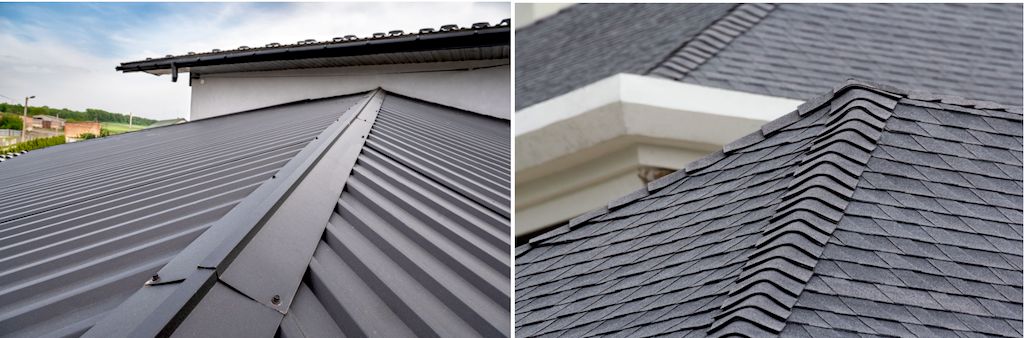
Your roof is a crucial part of your home. It protects you from the weather, like rain, snow and wind, and it insulates your home so you can maintain a comfortable temperature during the cool and warm months. Your roof also provides structural support. Without a roof, your home would be susceptible to leaks, mold, mildew, insects, rodents and other outside elements that could damage your roof and put your home’s structural integrity at risk.
Because your roof is an important barrier for your home, it pays to ensure your home has the best roofing system possible. But what type of roof is right for your home? You have several options, but two of the most common materials are metal and asphalt shingles.
Can't decide between an asphalt shingle roof and a metal roof? We’ll break down both materials so you can better understand your options and make the best decision for your home.
Metal roof basics, pros and cons

Residential metal roofs are usually made of steel, aluminum, or copper. They no longer look like the flat, corrugated panels you might find on a shed or barn. Today’s metal roofs can emulate wood, stone, clay, or even asphalt shingles, making them an attractive option for many homeowners.
There are several other benefits to installing a metal roof. The biggest one is lifespan. Depending on the material used, metal roofs can last 40 to 80 years. A manufacturer’s warranty of several decades can keep a well-maintained metal roof on your home for generations. Metal roofs last so long because they’re durable. When properly installed with the right roofing components, they can withstand wildfires, high winds, and hail. They can also handle heavy loads of snow and ice, though you should still clear your roof to help prevent damage.
Another benefit of metal roofing is energy efficiency. A metal roof doesn’t absorb the sun’s UV rays and convert them into radiant heat; instead, the rays bounce off the surface. As a result, your home stays cooler in the summer, and you can save up to 40% in energy costs.
Metal roofing pros and cons
| Pros | Cons |
|---|---|
| Lifespan | Expensive |
| Durability | Can be dented |
| Energy efficiency | Can be noisy during storms |
| Many styles and colors are available | Screws can become loose |
| Fire, wind and hail resistant | Difficult to install |
| Impervious to rot and insects |
Of course, metal roofs also have a few drawbacks. When you compare the cost of a metal roof vs. asphalt shingles, metal roofs are almost always more expensive. They can also be noisy, especially during heavy rain or hailstorms. The sound of those elements hitting the surface may be alarming to some homeowners. Although metal roofs are durable, they can dent if the metal isn’t strong enough.
Another disadvantage is the durability of the fasteners. Even though metal panels are designed to expand and contract as temperatures change, their fasteners do not have the same flexibility. Over time, screws can loosen and corrode.
Asphalt roof basics, pros and cons

Asphalt shingles became a common way to roof homes at the start of the 20th century. Today, they’re considered the most popular roofing material.
There are two forms of asphalt shingles: three-tab shingles and architectural shingles. Three-tab shingles lie flat and have three tabs or cutouts on each strip. Architectural shingles are laminated shingles. Compared with three-tab shingles, they’re thicker and add more depth and dimension to your roof.
Asphalt roofing pros and cons
| Pros | Cons |
|---|---|
| Cost-effective | Susceptible to mildew |
| Easy installation | Not as durable as other roofing options |
| Uniform or dimensional look | Doesn’t last as long as other materials |
| Various styles and colors | High winds and extreme heat can damage them |
| Can last a few decades with proper maintenance |
The main advantage of an asphalt roof is its cost, which is far lower than wood timbers or increasingly used metal sheets. Another plus is the wide range of thicknesses and colors available. Chances are, there’s a style that matches your home’s exterior. You can even find asphalt shingles that mimic the appearance of wood or slate.
On the other hand, the lifespan of asphalt shingles is limited. Even with a product warranty, the average cycle of this material is about 20 to 30 years. They’re also more affected by the environment. Excessive sunlight can cause cracks in the asphalt coating, and strong winds can blow shingles off your roof. As a result, you may pay more for repeated repairs than you would with a metal roof.
Metal vs. asphalt shingles: differences and similarities
There are several differences and similarities between asphalt and metal roofing. Let’s look at them.

Differences
The main difference between metal vs. asphalt roofing is price. Lightweight asphalt is easier to manufacture, so the material and installation costs are usually much lower. Metal panels cost more, depending on the material and design.
Installation is another difference between the two materials. Because asphalt shingles are lighter and smaller, some DIY homeowners can install them with the right education. That’s harder to do with metal sheets.
Metal sheets are also more efficient and longer-lasting than asphalt shingles. They handle the sun’s rays differently, which makes it easier to keep your home cool in the summer.
Plus, metal roofs last much longer than asphalt roofs. Asphalt shingles typically last only a few decades. Metal roofs can last almost twice as long. In some cases, a house owned by the same family for more than seven decades may never need a full metal roof replacement.
Similarities
Metal and asphalt roofs have some similarities. First, they both protect your home from UV and infrared rays. Metal reflects rays away from the house, while asphalt coating absorbs them so they don’t reach your interior.
Style variety is another similarity. Both materials come in several shapes and colors. Asphalt used to be the only roofing material commonly matched to neighborhood homes, but metal roofing now offers similar versatility.
Metal roof vs. shingles cost
"Is a metal roof cheaper than shingles?" The short answer is no. When it comes to installation and potential repairs, a metal roof will likely always be the more expensive option. Here’s a look at the different factors that affect the cost of metal roofs and asphalt shingles.
Metal roof costs

The average cost of a metal roof starts at $4,400 and can be nearly $9,000 or more. However, the Metal Roofing Alliance states metal roofing costs $800-$1,500 per square. The final amount depends on the square footage of the surface and the type of metal. Installation is another factor. Professional roofers cost more than installing the metal panels yourself.
Asphalt shingles cost

Asphalt shingles are far less expensive than metal roofs. Costs range from approximately $65-$350 per square.
Like metal roofs, there are other cost factors for asphalt. Roof size plays a large role in the final price. Professionals must use this to determine how many shingles are needed, along with underlayment and plywood.
The brand or style of shingle is also a factor. Even though they’re inexpensive overall, certain shapes, colors, and thicknesses cost more.
Overall, calculating the estimated cost of a replacement roof on your own is a two-step process. First, determine its size. This is usually found in county records or paperwork you received when you purchased the home. Second, take the total square footage and multiply it by the average cost of materials. Of course, you’ll also need to factor in labor. For the most accurate estimate, get quotes from at least three roofing companies in your area.
How to choose between metal and asphalt roofing
There are several key elements to consider when choosing a roof covered with asphalt shingles or metal panels. Keep the following in mind as you move through the process.
Step 1: Determine your budget
As mentioned, metal roofs are more expensive than asphalt roofs in terms of covering, hardware, and labor. Some higher-end traditional shingles aren’t nearly as pricey as copper panels. On the other hand, there’s a greater return on your initial investment with a metal roof because it lasts several decades longer.
Review your current budget and factor in the cost of future repairs and replacement. Also consider how long you expect to stay in the house. If a move is likely due to a job change, a metal roof may help raise your property’s value.
Step 2: Consider your environment and climate
If you live in an area prone to extreme heat, high winds, and severe storms, metal may be your best option. Metal roofs can take a beating. They withstand the sun’s powerful rays and drain rainwater easily. Studies show that properly secured roofs covered with this material can withstand winds up to 140 mph.
A roof covered with asphalt shingles is also durable. Instead of reflecting UV rays, the granules within the coating absorb them. Because they’re waterproof, rain and snow quickly flow into gutters. However, asphalt shingles aren’t as wind resistant as metal. When uplift occurs, shingles can loosen. So if you live in a windy area, asphalt shingles may not be right for you.
Step 3: Be realistic about maintenance and repairs

There’s not much maintenance required for a metal roof. The main concerns are the fasteners and the sublayers of plywood and rafters, which can fail because of extreme weather, water damage, or termites.
Asphalt roofs also have a low maintenance threshold. However, extreme weather can cause shingles to crack and blow away, so repairs are often more frequent. For example, asphalt roofs in the Southwest and other hot, sunny climates may need several repairs over their lifespans because of cracking and fading. Though repairs can extend usefulness, mismatched colors may eventually lead to a full replacement.
Step 4: How long do you plan to stay in your home?
Metal roofs have a longer lifespan than asphalt roofs, lasting up to 80 years. Add warranties, and the life of a metal roof may reach 100 years if catastrophic damage doesn’t occur. Asphalt shingles last about a quarter of a century. If you want to stay in your home for life without replacing the roof, a metal roof is your best bet.
Step 5: Estimate your return on investment
The return on investment (ROI) between an asphalt and metal roof depends on a few factors. First, what’s the purpose of the property? Is it a forever home, a flip, a rental, or a middle ground until something better comes up? If it’s a house you’re flipping or renting, research neighborhood trends and consult an expert for guidance. Potential buyers might prefer asphalt — or they may pay more for a metal roof. If it’s a forever home, especially one you hope to pass on to future generations, a metal roof may be the better choice because it will last longer.
Step 6: Browse different colors and styles

Both asphalt and metal roofs come in different colors and styles. Find one that fits your vision best.
Asphalt shingles come in a variety of shapes, thicknesses, and colors. Though some styles cost more than standard three-tab shingles, their uniqueness may be worth the investment. Today’s metal roofs offer similar versatility. Manufacturers can emulate different styles to fit most home categories.
Step 7: Do you plan to DIY your roof installation?
Of the two roof types, asphalt is easier to install for both professionals and DIYers. The hardest part is moving all the materials onto the roof. After that, tearing off and replacing an asphalt roof is relatively simple, as long as the installers have the proper equipment and training.
It’s not as easy to add a metal roof to your property. The materials aren’t as light or small as asphalt shingles, and they’re more difficult to attach to unusually designed roofs. Hiring professional roofers is highly recommended.
Step 8: Look up your community guidelines
Some homeowners don’t consider this factor when choosing between a metal and asphalt roof. Some neighborhoods have strict design guidelines for exterior materials, especially in historically significant areas or communities with a homeowners association.
So, which is better — a metal roof or shingles?
After you complete Steps 1 through 8, it’s time to decide. In most cases, an asphalt roof is the better choice if you have a smaller budget and find a style you like. If you have a larger budget and live in an area with extreme weather, you’ll probably lean toward a metal roof.
If you’re still not sure, do a bit more research. You may find that you actually prefer a slate or clay tile roof, for example. Getting a professional opinion can also help you decide. Contact several local roofers to find out how much they charge to install a roof made of asphalt, metal, or other materials.
Hire a roofer on Thumbtack today

Now that we’ve covered the pros, cons, and costs of metal and asphalt roofs, it’s time to take the next step. Choose what’s right for you in terms of price, design, and ROI. Your first step: start searching for roofers near you.
Don’t hire the first one you contact. Choose a few with high ratings and read their customer reviews. Check how many hires they’ve had on Thumbtack, and look at their before-and-after photos of past roof installations. Then contact at least three professionals to set up a consultation.
During your conversations and consultation, give the roofers details about your home and your priorities for the new roof. They should provide an estimate of material and labor costs, but don’t be afraid to ask plenty of questions.
FAQs
Do metal roofs leak more than shingles?
Metal roofs may leak if they are not installed properly. The same is true of asphalt shingle roofs. Prevent leaks by making sure a top-rated, reputable, and experienced roofing professional performs the installation.
Do you need gutters with a metal roof?
Yes, you will need gutters with a metal roof. In fact, you should always consider installing gutters with any type of roofing system.
Do metal roofs rust?
Metal roofs can rust. To help prevent this, talk to your roofer about the technologies and protective coatings they can apply to your metal roof. Aluminum tends to be more resistant to rust, but it’s still worth applying a coating.
A note about project costs included or linked in this article: Figures represent national average cost estimates using data provided by Thumbtack pros and additional research. These figures are provided for educational purposes only and are subject to change at any time due to various factors. Details about your specific project and local rates can impact costs.
How it works.

Search.
Browse profiles, see prices and use filters to find pros who match your project.

Chat.
Contact the pros you like to discuss project details.

Hire.
Check pro availability and book appointments right in the app.
Find local pros for your project
Tell us what you're looking for and we'll show you pros right for the job, with prices.