Zoysia grass vs. Bermuda: What’s best for your lawn?
By Melanie Fourie•Last updated Apr 27, 2023
Last updated Apr 27, 2023
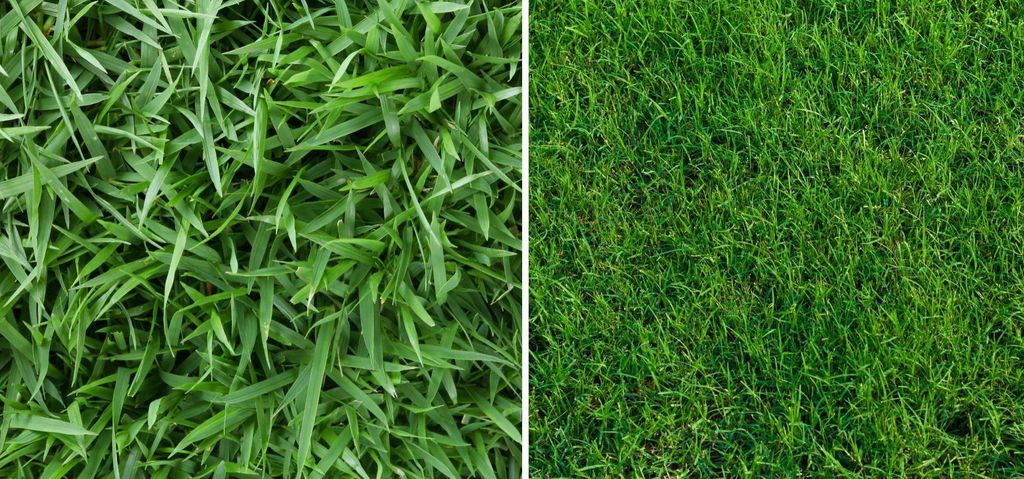
Settling on a type of grass for your lawn can be a time-consuming process. You have to take the climate, heavy foot traffic, irrigation requirements, aesthetics and other factors into account before making your decision.
You might be torn between Zoysia and Bermuda grass — which are two excellent (and common) options for your lawn. They each have advantages and disadvantages, but which one is ultimately better?
Read on for our comprehensive comparison of these two popular grass types.
Zoysia vs. Bermuda grass comparison chart
Here's a quick look at some of the key differences between Bermuda and Zoysia grass:
| Zoysia | Bermuda | |
|---|---|---|
| Growth rate | Slow | Fast |
| Growing season | Warm-season grass that grows in spring, summer and early fall | Warm-season grass that grows in spring, summer and early fall |
| Dormant season | Winter | Winter |
| Texture | Fine to medium texture | Mostly medium to coarse texture; hybrids can have a fine texture |
| Appearance and color | Typically dark green and dense, but can range from light to medium green; can turn brown in cold weather | Typically gray-green or blue-green and dense, but can range from light-dark green; can turn brown in cold weather |
| Mowing height | 1-2 inches | 1-2 inches |
| Mowing frequency | Weekly | Weekly |
| Drought tolerance | High | High |
| Cold tolerance | Low/Moderate | Low |
| Shade tolerance | High | Low |
| Salt tolerance | Moderate | High |
| Foot traffic tolerance | High | High |
| Watering needs | 1 inch per week | 1-1 ½ inches per week |
Sources: Agriculture and Natural Resources, University of California, Texas A&M AgriLife Research, Clemson College of Agriculture, Forestry and Life Sciences and Pennington Seed.
What is Zoysia grass?
Like Bermuda and St. Augustine grass, Zoysia is a warm-season grass that thrives in warm climates. However, some Zoysia varieties can also endure cold weather.

Zoysia’s recommended mowing height is 1-2 inches, and it typically needs 1 inch of water per week.
Zoysia is considered relatively low-maintenance, dense, thick grass. However, there are at least three popular species — and their characteristics and maintenance needs may vary:
- Zoysia japonica has a coarse texture and is a lighter green. It has better cold tolerance than Zoysia matrella.
- Zoysia matrella has a finer texture and grows slowly. It’s not as cold-tolerant as Zoysia japonica and is considered a high-maintenance grass.
- Zoysia tenuifolia also grows slowly and isn’t as cold-tolerant. It has a “puffy” appearance because of the small clumps it creates in your lawn.
What does Zoysia grass look like?
When growing during warmer weather, Zoysia has a dense growth pattern with a dark, attractive green color. However, it can also be light or medium green. Its blades begin to turn brown during the cooler months.
Pros and cons of Zoysia grass
The following comparison shows the pros and cons of Zoysia grass. Use it to help you make a decision for your lawn:
| Pros | Cons |
|---|---|
| Drought and heat tolerant | Some species are not as drought tolerant |
| Shade tolerant | Grows slowly |
| Some species have good cold tolerance | Some species are not as cold tolerant |
| Tolerant to heavy foot traffic | Some species can be high-maintenance |
| Its thickness and density make it attractive to the eye | Its thickness can make it difficult to mow and requires sharpening mower blades |
What is Bermuda grass?
Bermuda grass is another popular choice for lawns. Like Zoysia, it’s a warm-season grass that peaks in spring, summer and early fall. Bermuda grass can also withstand hot and dry conditions.

But unlike Zoysia, it has a faster growth rate and a lower tolerance to cold and shade. Bermuda is also salt-tolerant, so you can grow it in seaside states.
To keep your Bermuda grass from going dormant in the summer, give it at least 1-1 ½ inches of water per week.
What does Bermuda grass look like?
Depending on the variety, Bermuda can appear gray-green and range from light to dark green. It typically has a texture that ranges from medium to coarse, but hybrids are finer and favor blue-green or dark green coloring.
Pros and cons of Bermuda grass
Have a look at this table for a better understanding of Bermuda’s pros and cons:
| Pros | Cons |
|---|---|
| Drought and heat tolerant | Not cold tolerant |
| Salt tolerant | Grows vigorously |
| Tolerant to heavy foot traffic | Higher maintenance |
| Its thickness and density make it attractive to the eye | Low shade tolerance |
So, which one should you choose for your lawn?
The choice between Bermuda grass and Zoysia comes down to a few important factors. Consider the following scenarios to help you make a decision:
| Choose either if… | Choose Zoysia if… | Choose Bermuda if… |
|---|---|---|
| You live in a sunny, warm or dry climate | Your area tends to get colder | You live in a coastal area |
| Your region has sandy soils | You want a lower-maintenance lawn | You have enough time or resources to maintain your lawn |
| Your lawn will get a lot of foot traffic | Your yard has a lot of shade | You want your grass to establish quickly |
| You think they’re both beautiful, attractive grass types | You want a lawn that stays green for a longer period of time |
Both types of grass are ideal for warm climates. If you live in a sunny state, either would be ideal. If you live in a region with harsher winters, you should stay away from Bermuda grass, as it can't handle the cold. In this case, Zoysia grass would be the better choice.
If you're always pressed for time because of a busy schedule, try to avoid Bermuda grass. Sometimes this grass requires more frequent mowing because it grows fast. Zoysia grows much more slowly, so you won't need to mow it as often.
However, you should water both grass types infrequently to encourage a healthy root system.
Hire a lawn care professional near you
Finding the right grass for your specific climate conditions and lawn care needs can be tricky. Fortunately, you don't have to navigate the process on your own. When in doubt, speak to a local lawn care professional near you.
When comparing Bermuda and Zoysia grass for your lawn, a local professional will consider your region’s climate, soil types and other factors so they can help you make the best decision. Download the Thumbtack app today, and start searching for top-rated pros.
FAQs
Does Zoysia stay green longer than Bermuda?
Zoysia grass will typically stay green longer than Bermuda grass. Bermuda grass will remain green all summer and into late autumn and when temperatures begin to plummet in the winter. Zoysia grass also stays green for more or less the same stretch, although Zoysia becomes green again earlier in the spring.
How it works.

Search.
Browse profiles, see prices and use filters to find pros who match your project.

Chat.
Contact the pros you like to discuss project details.

Hire.
Check pro availability and book appointments right in the app.
Find local pros for your project
Tell us what you're looking for and we'll show you pros right for the job, with prices.