How much will your insulation installation or upgrade cost?
Columbus, OH 43215
Spray foam insulation services cost$1,189 - $3,227
National average fixed price
- Most common low price:$1,189
- Most common high price:$3,227
How much does spray foam insulation cost?
By Thumbtack Staff
Last updated Wed, Oct 15
The national average cost of installing spray foam insulation ranges from around $1,189-$3,228, and most people pay around $19,60, according to Thumbtack data. Some pros will charge by the square foot, and costs tend to range from $3-$5 per square foot to install. The price depends on multiple factors, such as the type of foam and how much of it you need to properly insulation your home or building.
| National average cost | $1,960 |
|---|---|
| Low-end average cost | $1,189 |
| High-end average cost | $3,228 |
The cost of open-cell foam is $0.35-$0.55 per board foot, and it costs $1-$2 per board foot for closed-cell foam insulation. One board foot is 12 inches wide, 12 inches long and 1 inch thick.
If you’re planning to upgrade your home’s insulation, this spray insulation cost guide outlines everything you need to know, from obtaining cost estimates to choosing a contractor.
Table of Contents
- Spray foam insulation cost per square foot
- Open-cell vs. closed-cell insulation cost
- Spray foam cost vs. other insulation types
- Spray insulation cost factors
- How thick does spray foam insulation need to be?
- How to install spray foam insulation
- Where to use spray foam insulation
- Spray foam insulation benefits
- How to hire an insulation contractor
- Find spray foam insulation contractors near you
- FAQs
Spray foam insulation cost per square foot
The total cost of spray foam insulation depends on how much you plan to install. On average, the cost of spray foam insulation per square foot is $3-$5.
| Square footage | Average cost of spray foam insulation |
|---|---|
| 50 | $150-$250 |
| 100 | $300-$500 |
| 150 | $450-$750 |
| 200 | $600-$1,000 |
| 250 | $750-$1,250 |
| 300 | $900-$1,500 |
Note: Prices assume 1-inch of foam thickness.
Open-cell vs. closed-cell insulation cost
Open-cell insulation costs $0.35-$0.55 per board foot, closed-cell insulation costs $1-$2 per board foot.
Open- and closed-cell foams have different benefits — and disadvantages. Deciding which one to use depends on where you’re planning to install it and what type of performance you expect from it. For example, open-cell spray foam is a strong air barrier — but closed-cell spray foam is better, and it’s a vapor retarder.
Here’s a look at the two different spray foam insulation types:
| Open-cell foam | Closed-cell foam | |
|---|---|---|
| Cost (per board foot) | $0.35-$0.55 | $1-$2 |
| Description | -Material is lighter -More affordable to install -Lower R-value than closed-cell foams -Spongy texture -Filled with air -Water vapor moves more easily through the material | -Provides greater R-value than open-cell foam -Holds up against moisture build-up and air leaks -More expensive to install -Material is denser and stronger than open-cell foam -Filled with a gas to help expansion |
| R-value | R-3.5 to R-3.8 | R-7 to R-9 |
| Best for insulating... | Hard-to-reach areas | Buildings, appliances |
Because of its density and higher R-value, choosing closed-cell insulation is almost always a good idea. However, talk to an insulation contractor. They can help you decide between the two options based on your needs and budget.
Spray foam cost vs. other insulation types
| Insulation type | Cost per square foot |
|---|---|
| Blown-in | $0.17-$2.66 |
| Batt | $0.50-$2.18 |
| Rigid foam | $0.90-$1.88 |
| Spray foam | $3-$5 |
Spray insulation cost factors
The key factors affecting the cost of spray foam insulation are:
- Thickness. The thicker your insulation, the more you’ll pay.
- Type of spray foam. Closed-cell foam insulation costs at least three times more per board foot compared to open-cell foam.
- Your property's location, layout and how easy it is to access the areas (attic, walls, basements, crawl space, windows, doors, etc.) that require spray foam insulation.
- The total square footage and the number of rooms that need to be insulated. These details can also affect the project’s overall scope and the time needed to complete the job.
When you’re requesting cost estimates from insulation professionals, you can ask them to break down the variables that impact material and installation costs.
How thick does spray foam insulation need to be?
You should always ask your insulation contractor how much insulation you need and how thick it should be. Ultimately, it comes down to where you plan to apply the insulation, your climate and the type of insulation you choose (open cell vs. closed cell).
What is R-value?
R-value is a measure of the insulation’s resistance to heat flow. Closed-cell insulation has a higher R-value than open-cell insulation, but exact values will vary depending on the product. For example, an open-cell spray foam product may have an R-value of 3.7 per inch, while a closed-cell spray foam product may have an R-value of 6.2 per inch.
Also read: How much does attic insulation cost?
Get free estimates from top-rated Insulation Professionals.
How to install spray foam insulation
Insulation contractors may have different processes when applying insulation, but here’s what you can generally expect:
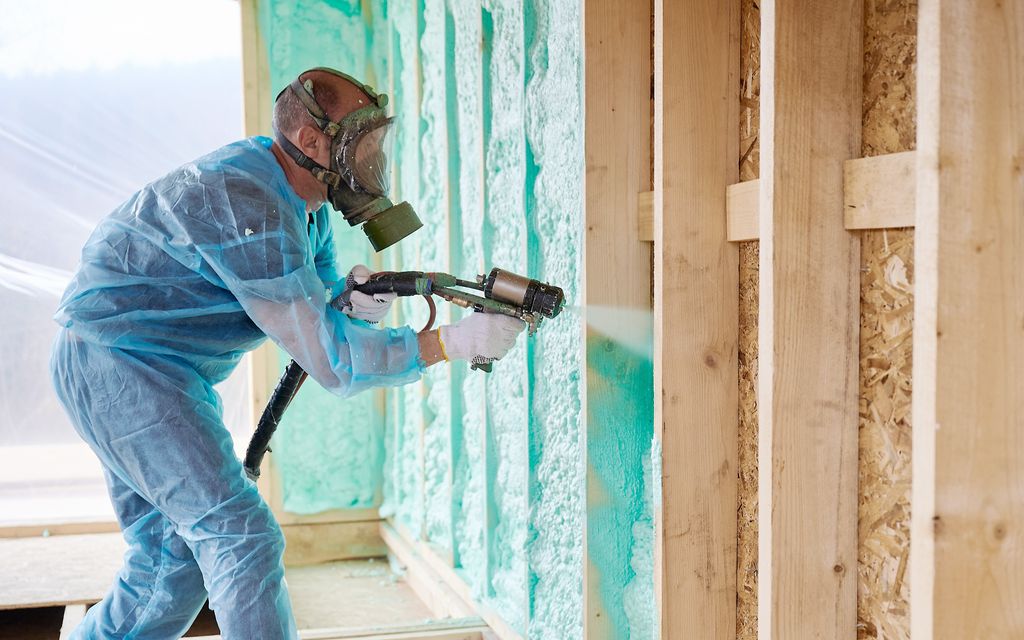
Preparing the site A contractor will identify any potential risks or hazards near the installation site. They’ll inspect the area, make sure they have the required permits and ask occupants to clear the home before application begins.
Other preparation steps may also include shutting down your HVAC system and sealing the air intakes to prevent dust and vapors from flowing throughout your home. They may also seal the air intakes and bring in portable ventilation equipment.
Applying the spray foam
When it’s time to install the insulation, the equipment and contractors will arrive. They’ll put on their personal protective equipment. Contractors should comply with the spray foam manufacturer’s guidelines, which often will include information on:
- How to process the spray foam materials
- The total thickness for the insulation
- How to trim the foam
- How long to wait for the foam to cool before doing another pass
During the application process, a contractor may also perform repairs and apply a protective coating. When they’re done, they’ll clean up the site and properly dispose of the waste material.
Where to use spray foam insulation
You can apply spray foam insulation in the following areas in your home:
- Attics
- Basements
- Crawlspaces
- Floors
- Roofs
- Small gaps (seal spaces around electrical outlets, ductwork, etc.)
- Walls
Spray foam insulation benefits
There are several other insulation products you can use (and you can use the different types together), so why choose spray foam?
Insulating your home with spray foam has its benefits. For example, spray foam is a good option if you have oddly shaped areas that need insulation. Specifically, spray foam insulation can be used to fill and insulate:
- Wall cavities
- Hard-to-reach areas
- Spaces with wires or other obstructions
- Underside of a roof
- Underside of a floor
- Existing finished areas
If you have drafts and rooms with uneven temperatures, insulation can help fix that while saving you money on energy. Sealing and insulating your home can save homeowners 15% on heating and cooling costs and 11% on total energy costs, according to the Environmental Protection Agency. Sprayed-on foam insulation is also moisture resistant and a strong air barrier.
Even if you decide not to use spray foam as your insulation product, it’s still important to inspect your home and insulate the areas that need it. If spray foam insulation isn’t right for you, talk to a professional about blown-in insulation, batt insulation, rigid foam insulation and foam board insulation.
How to hire an insulation contractor
Hiring an insulation contractor is simple. Start with searching for a professional on Thumbtack, which gives you the ability to:
- Read customer reviews and ratings for top-rated insulation contractors near you.
- See how many times the pro has been hired on Thumbtack.
- View photos of past insulation projects the contractor completed.
- Contact and message the pro.
- Request a price quote for your project.
When searching for an insulation contractor, look out for professionals who have certifications and licenses. For more information, read our guide on How to Hire a Contractor.
Questions to ask an insulation contractor
Don’t base your decision on the cost alone. Contractors with significantly lower prices may use cheaper materials or lack experience.
In addition to obtaining multiple cost estimates, ensure the contractor you hire is qualified and reliable by asking them a few questions. For example, you can ask:
- How much do you charge, and how do you set your prices?
- Are you insured and bonded?
- Do you have any references from previous clients?
- Do you offer a warranty?
- Do you recommend spray foam insulation for my particular needs?
- Have you completed spray foam insulation projects similar to mine? If so, how many times?
- What spray foam insulation training and certification has your company and technicians undertaken?
- Are you subcontracting the work?
- Can you explain your spray foam installation process?
- How long will it take to apply the spray foam?
- Are permits needed? If so, are you responsible for obtaining them?
- What type and brand of spray foam will you use?
- Can you inspect my home for other areas that need insulation?
Find spray foam insulation contractors near you
If you’re ready to enhance your home’s comfort and energy efficiency, use Thumbtack to find a spray foam contractor near you today.
FAQs
Where should you not use spray foam insulation?
Despite the versatility of spray foam insulation, The Family Handyman advises not using it around the following electrical boxes and recessed ceiling canister lights. You should also avoid using a lot of high-expansion spray foam around your doors and windows. Otherwise, the foam can make it hard to open your windows and doors.
Where can you buy spray foam insulation?
You can buy spray foam insulation kits in a store or online from a home improvement retailer. You can also buy directly from certain spray foam manufacturers.
How do we know these prices?
5m
Customers this year
300k+
Pros this year
20k
Projects a day
How it works.

Search.
Browse profiles, see prices and use filters to find pros who match your project.

Chat.
Contact the pros you like to discuss project details.

Hire.
Check pro availability and book appointments right in the app.
You might also like