Basement remodeling ideas and renovation tips
By Alyssa Chua•Last updated Mar 19, 2024
Last updated Mar 19, 2024
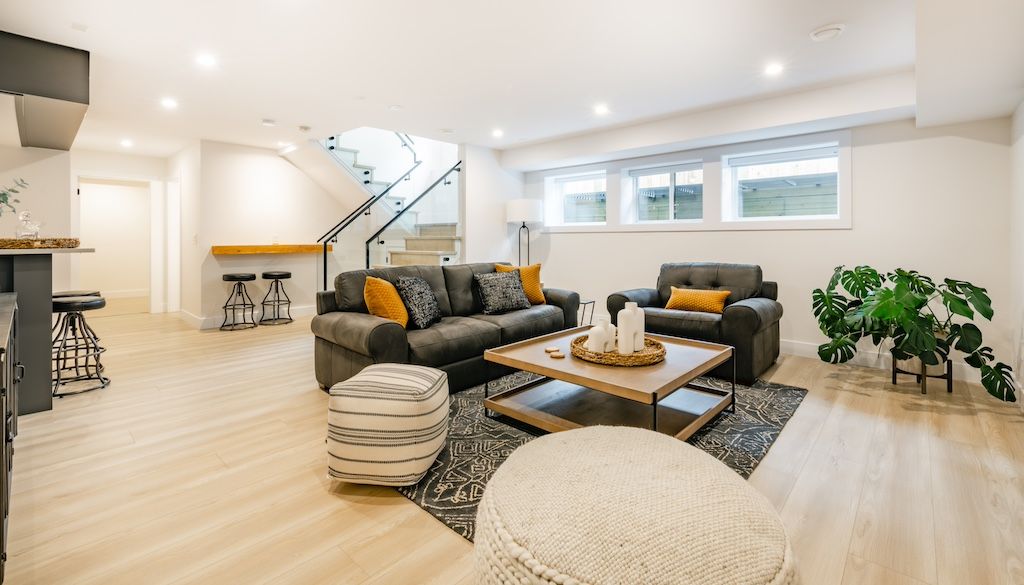
Are you thinking about remodeling or renovating your basement? Perhaps you've dreamed about creating a cozy entertainment room, a home office, or a guest suite?
No matter what your plans are, we'll cover everything you need to know about basement design and layout, flooring options, and lighting and ventilation considerations. Let's dive in and explore the possibilities for your basement remodel project.
Basement design and layout

When planning basement remodel ideas, a functional, attractive layout is essential. Consider these factors:
What's the purpose of your basement?
First, think about how you want to use the basement. Will it be a multipurpose area or serve one specific function? This will guide your design choices and help the layout fit your needs.
Divide your basement into zones
If you have a large basement, divide it into areas so you can plan the whole space. Creating zones helps you think through ventilation, lighting, plumbing, and more.
Maximize the space
Use built-in storage, such as shelves or cabinets, to keep the area organized and clutter-free. Consider multifunctional furniture that can serve more than one purpose, like a sofa bed or ottomans with hidden storage.
Even a small basement can be designed to make the most of the space. For example:
- Consider the scale of your furniture. Choose the right size and amount of furniture. Modular pieces can make installation easier, and multipurpose furniture can help save space.
- Go for light colors. When choosing paint for your walls, flooring, or upholstery, light or neutral colors work best. A bright environment can make the space feel more open and airy.
- Use sliding doors. If you want stylish, practical doors that don't take up much room, choose sliding doors. They can also help if you want to divide the basement into multiple rooms.
Check accessibility to your basement
How do you get into your basement? Can you enter through the yard, or is the only access from inside your home? Either way, make sure the access is safe and properly maintained.
Does your basement have natural lighting?
Some basements have windows, while others have no natural light at all. Make sure the space is well-lit so it's comfortable to spend time in.
If your basement has limited windows, consider artificial lighting solutions. Recessed lighting or track lighting can brighten the space and make it feel more inviting.
Consider adopting a specific style
There are plenty of basement design styles to choose from. Popular options include contemporary, industrial, rustic, and transitional. Each style has its own characteristics and can create a distinct atmosphere in your basement.
Basement flooring options

When it comes to basement remodeling ideas, choosing the right flooring is crucial.
Basement floors are prone to moisture, so it's important to choose a flooring option that can handle those conditions. Explore these types of basement flooring to help you decide:
- Carpet is a popular choice if you're turning your basement into a family room or playroom. However, it can trap allergens and be difficult to clean.
- Ceramic or porcelain tile is durable and easy to clean, making it a good choice for high-traffic basements. It also adds a stylish, luxurious touch.
- Concrete is moisture-resistant and requires only a few materials to install. You can paint or stain it to create the look you want. However, it can be cold and noisy.
- Cork provides temperature insulation, feels soft underfoot, and absorbs sound. However, it's prone to deterioration and can be difficult to install yourself.
- Engineered hardwood holds its shape even when exposed to moisture. However, it can be expensive to install and difficult to remove.
- Laminate flooring is a cost-effective alternative to hardwood that comes in many colors and styles. It's also water-resistant, making it a good choice for basements.
- Rubber is a great option if you're turning your basement into a gym or playroom. It provides good insulation, though water can still pass through the seams.
- Vinyl flooring is another popular choice because it's water-resistant, easy to clean, and available in many colors and styles.
When selecting flooring for your basement, consider your budget, your preferred look, and the amount of moisture in the space.
You'll also need to inspect and prepare the surface before installing new floors. Make sure your basement floor is level and free of cracks. If not, you may need to hire a pro to fix it.
If you're unsure about installing basement flooring yourself, it's best to hire a professional. They have the experience and tools to ensure a smooth installation and help you create a beautiful, functional basement space.
Basement lighting ideas

Proper lighting and ventilation are crucial when planning a basement remodel. These tips can improve both the function and look of the space, while also supporting the health and comfort of the people using it:
How to improve natural light in your basement
When building a basement, you want to let in as much natural light as possible. Whether you're turning it into an extra room or a home office, you want it to be as livable as possible. Here are some ways to improve natural light in your basement:
- Use mirrors. They help reflect natural light throughout the space.
- Use light-colored paint and furniture. This helps reflect and maximize natural light.
- Install egress windows. Egress windows provide a second way out in an emergency. They also let in much more light than regular windows.
- Install a solar tube. Solar tubes bring natural light into a house through a tube with the help of a series of mirrors. They are a great option if you can't install egress windows.
Best lighting fixtures for basements
When choosing lighting fixtures for basements, pick options that provide enough brightness and create a welcoming atmosphere. Consider these fixtures:
- Recessed lights installed in the ceiling can provide a clean, modern look.
- Ceiling lights are usually installed at the center of the ceiling and controlled by a wall switch.
- Wall sconce lights provide ambient lighting and can add visual interest to a basement.
- Track lighting lets you direct light where you need it.
- Floor lamps stand on the floor and can be moved around the room as needed, offering flexibility.
- Tray lights are partly hidden and use the perimeter of the ceiling as the base for the light.
- Pendant lights can add a stylish touch and provide focused lighting for specific areas, such as a basement bar or game table.
Make sure your basement is well-ventilated
Natural ventilation and fresh air are important when designing a basement. If your basement doesn't have proper ventilation, you could run into serious problems. Improper ventilation can encourage mold growth and humidity, which can damage your walls and paint. A warm, wet environment can also attract pests.
Consider adding the following to your basement remodel:
- A dehumidifier and fan.
- A medical-grade HEPA filtration system or air purifier.
- An air conditioner in your basement.
- If your basement has windows, open them occasionally.
- If your house has AC but the basement doesn't, keep the basement door open when possible.
Big and small basement remodel ideas
Ready for some basement remodeling inspiration? Here are some of our favorite finished basement ideas:
1. Bedroom or ADU (Accessory Dwelling Unit)

You can also convert your basement into a separate residential unit, or ADU, for extended family members or to rent out.
Most ADUs are fully functional, with a bedroom, a kitchen, a bathroom, and more. Turning your basement into an ADU may have different requirements depending on where you live, so it's best to check local laws and regulations first.
2. A game room for adults or kids

You can also turn it into a game room for adults and kids. Create a play area for children on one side of the room with toys, blocks, and board games. Or, add a ping-pong, foosball, or pool table to create a more upscale game room for adults.
3. A gym or exercise room with a bathroom

Photo credit: Alumni Builders Inc
If you love staying fit, you can convert your basement into a mini gym with your basic equipment. Or go bigger and build your own rock climbing wall. You can also add a sauna and a bathroom to relax in after your workout.
4. A bar with an entertainment area

If you like having guests over, you can turn your basement into a bar. Add mood lighting, stools, and a cozy couch or two, and invite your friends over for cocktail mixing or wine tasting.
5. The ultimate den, TV, or living room

Having an extra space for the family to hang out is always a great idea. Turn your basement into a family room or den with a home theater setup. Install a sound system and mount a huge TV on the wall.
6. An office space

Working from home can be challenging if you don't have a space where you can focus. You can transform your basement into a private office space so you can concentrate without distractions.
7. Additional storage space

Turning your basement into a designated storage area is always a good idea. Look for the most effective organization and storage systems to maximize the space and store as many items as possible.
8. Laundry room

Would you rather do your laundry downstairs? Consider moving your washer and dryer to your basement and installing moisture-resistant flooring. Just make sure your basement has the proper plumbing and electrical hookups.
Important note: Before you move forward with your basement renovation, make sure you understand the rules and regulations, especially for plumbing and electrical work. You may need approval from the building owners and permits from the city.
How much does it cost to remodel a basement?
The cost to remodel a basement depends on the size of your basement and the type of basement you want. Remodeling a larger basement will cost much more than remodeling a smaller one. Adding a bathroom or laundry room often requires additional plumbing work, which can increase the cost.
Hire a contractor to remodel your basement
Remodeling a basement is no easy feat. It requires careful planning, meeting building codes and requirements, and more. While some basement renovation ideas may be easy to DIY, hiring a professional is always recommended.
- And more!
A note about project costs featured in this article: Figures represent national average cost estimates using data provided by Thumbtack pros and additional research. These figures are provided for educational purposes only and are subject to change at any time due to various factors. Details about your specific project and local rates can impact costs.
How it works.

Search.
Browse profiles, see prices and use filters to find pros who match your project.

Chat.
Contact the pros you like to discuss project details.

Hire.
Check pro availability and book appointments right in the app.
Find local pros for your project
Tell us what you're looking for and we'll show you pros right for the job, with prices.