A quick guide to furniture refinishing
By Thumbtack Staff•Last updated Jun 17, 2024
Last updated Jun 17, 2024
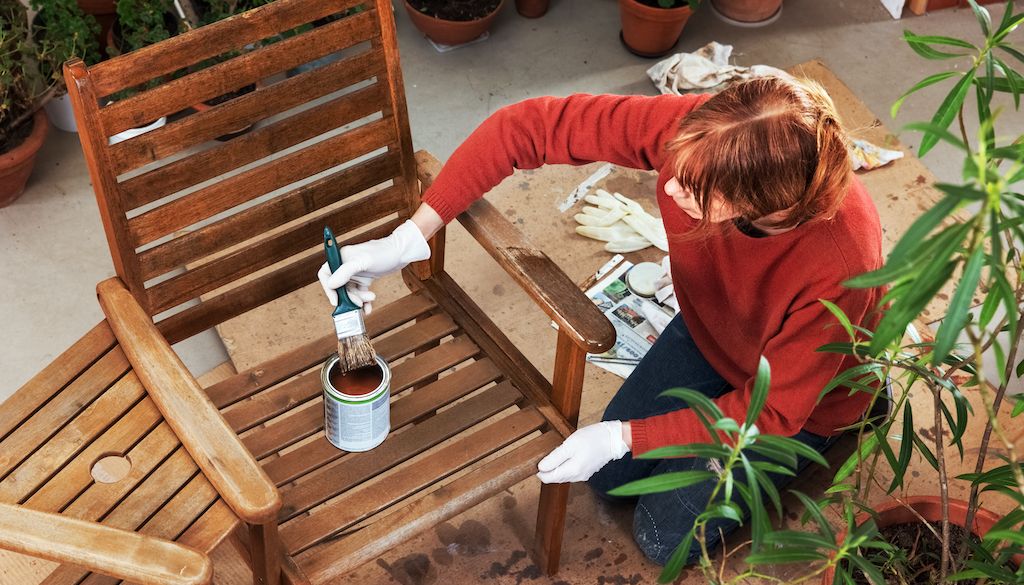
You scored big at the flea market. Here’s everything you need to know to give that 19th century roll-top desk a new life (without damaging the wood or losing a thumb).
5 easy DIY wooden furniture restoration tips
Tip #1: Get rid of the white rings on your coffee table. (And learn to use a coaster.)
Unless you’re a stickler about coasters, you’ll probably run into white rings on wooden furniture. If you’ve ever tried to wipe off a ring while it was still damp, you know the stain can be stubborn and the top layer of wood may come right off.
Instead, touch up water-stained furniture by putting petroleum jelly on the ring and letting it sit overnight. The oil should remove the ring, or at least make it less visible. In the morning, wipe the excess jelly off with a clean cloth.
Tip #2: Replace chipped wood or damaged molding with epoxy putty
Wood furniture is bound to get chipped over time, but you can fill chips with epoxy. In putty form, epoxy is about the density of wood and pliable enough to shape, sand, and stain. It’s also inexpensive, generally less than $10 a tube at your local home improvement store.
Before applying the putty, knead it in your gloved hand until it’s sticky. Then you have 10 minutes to apply the epoxy before it hardens into shape. Make sure to level the putty with a straightedge or razor before it dries. Once it’s set, you can sand the epoxy layer down and stain it so it blends in.
Tip #3: Uncover the quality of wood on an old piece of furniture
When you refinish a piece of wood furniture, you’re revealing wood that has been coated in clear finish, paint, wax, oil, or something else. Before you start a project, it’s important to understand the wood beneath.
To do that, coat the furniture in mineral spirits, a petroleum byproduct that saturates the finish to expose what the furniture looks like without any coating. Depending on how things look, you might choose to add a new layer of finish and call it a day — or, if there’s still a lot of visible damage, you might go to greater lengths to restore warped or discolored wood.
Tip #4: Get rid of dents and restore your old wood table with a wipe-on finish
You can get rid of dents and divots in the surface of your table by cutting small slits in the surface with a razor blade and allowing water to seep into the open grain. Adding a few drops of moisture into the wood fiber can help the surface swell and level out.
To finish the table, add a new clear coat of wipe-on finish with a clean rag, smoothing it over the top of the table in circles. Remove any excess finish with a paper towel, wiping it off in the direction of the wood grain. Give the table 12 hours to let the stain dry.
Tip #5: Too much elbow grease? Hire a pro to tackle your refinishing project for you
In many cases, the DIY approach to furniture refinishing is the way to go. If you’re crafty, dents and scratches are a snap. If you’re handy with wood glue, there’s no reason you can’t reattach surface-level decorations and details. But if you’re tackling furniture restoration projects that affect the structural integrity of a piece — restoring chairs, dressers, or busted chifforobes — it’s a good idea to bring in a professional to give you some guidance. There’s nothing fun about a dining room table collapsing beneath your party guests.
How much does furniture refinishing cost?
Furniture refinishing can mean anything from filling in wood chips to restoring entire pieces of furniture, top to bottom. Refinishing work generally involves stripping old stain, sanding, restoring original wood, repairing scratches, cracks, and dents, and applying new stain or paint. A professional can help you refinish everything from tables, sofas, chairs, and rocking chairs to desks, armoires, and bed frames. They are trained to work with all kinds of wood, including oak, mahogany, and maple.
For standard jobs that don’t involve rare antiques or special circumstances, most professionals provide a catch-all price. This price is based on the type of furniture and level of damage. In general, the more damage a piece of furniture has, the more time it takes and the higher the price will be. The same is true for detail — items with extremely intricate decoration, scrollwork, or delicate parts generally cost more to repair. This is most often the case with older antique furniture pieces.
Who to hire to help with furniture refinishing
You’re crafty, but it’s not clear whether that bookshelf you fixed up will be able to hold all the college textbooks you refused to give away. Hire someone to help:
How it works.

Search.
Browse profiles, see prices and use filters to find pros who match your project.

Chat.
Contact the pros you like to discuss project details.

Hire.
Check pro availability and book appointments right in the app.
Find local pros for your project
Tell us what you're looking for and we'll show you pros right for the job, with prices.