How to clean a dryer
By Kristen Snyder•Last updated Aug 10, 2023
Last updated Aug 10, 2023
Table of Contents
- What you'll need
- 1. Disconnect the power
- 2. Clean out the lint trap
- 3. Wipe down the inside of the dryer
- 4. Access the vent duct
- 5. Clean out the dryer vent
- 6. Clean out the exterior vent
- 7. Put everything back together
- 8. Run a short cycle on the air-dry or fluff setting.
- How often should you deep clean your dryer?
- What happens if you don't clean your dryer?
- Need more help? Use Thumbtack
- FAQs
Find local pros for your project
Search for pros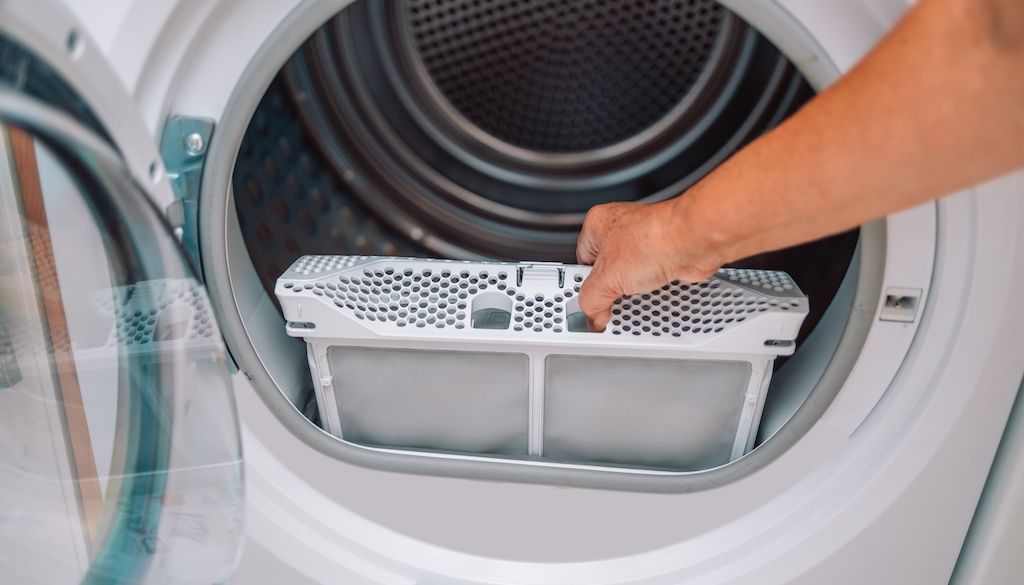
Cleaning your dryer probably isn't something that's top of mind. After all, since you're only putting clean clothes in it, shouldn't it stay fresh? Unfortunately, your dryer still can — and will — get dirty. In this guide, learn how to properly clean your dryer.
What you'll need
For this process, you'll need basic cleaning supplies like:
- Nylon brush
- Hot water
- Dish soap
- Household multi-purpose cleaner
- Towel or sponge
- Dryer cleaning brush
- Vacuum cleaner with a hose
- A screwdriver, if you need to access your vents.
Once you've gathered your supplies, it's time to get started.
1. Disconnect the power
Before you can start cleaning the inside of your dryer, shut it off completely. This prevents your dryer from accidentally turning on while you're cleaning it.
- For electric dryers, simply unplug the dryer from the wall socket.
- For a gas dryer, unplug the dryer from the wall outlet too. For extra caution, you can also close the gas shut-off valve behind the dryer by turning the handle perpendicular to the pipe.
Important note: Don't disconnect the gas supply line yourself. You don't need to in order to clean your dryer, and an improperly reconnected line can leak.
If you need the dryer moved far enough that the flexible connector won't reach, hire a licensed repair pro or plumber to disconnect and reconnect it. If you ever smell gas — a sulfur or rotten-egg odor — leave the house immediately without flipping switches or using your phone indoors, then call your gas utility's emergency line from outside.
2. Clean out the lint trap
When the lint trap is clean, it improves airflow and your dryer's performance.
How do you clean the lint trap? First, locate it. Most lint traps are located on the top of the machine or inside the door. Consult your owner's manual if you're not sure where yours is. Simply pull out the screen, and remove the collected dryer lint with your hand.
If you want to give your lint trap a more thorough deep clean, use a vacuum extension tool to suck out any lingering dirt on the interior and exterior of the trap. Pay close attention to the moisture sensor strips and make sure these are clean.
You can also scrub the screen gently with a nylon brush or toothbrush. It also helps to use a mix of hot water and liquid detergent to remove stubborn lint. Rinse with water and make sure the trap is thoroughly dry before you put it back.
3. Wipe down the inside of the dryer
Should you clean the inside of your dryer? This isn't something you need to do frequently, but it can help when you have residue buildup inside the drum. This can happen if you frequently use fabric softeners and dryer sheets.
First, take your vacuum and suck out any noticeable debris or lint in the drum. The next steps vary depending on whether you have a gas or electric dryer:
- For electric dryers, use warm soapy water to wipe down the inside of the drum.
- For gas dryers, use a microfiber cloth and a nonflammable household cleaner to wipe down the dryer drum.
In both cases, if your dryer is smelly, you can try white vinegar to eliminate odor-causing bacteria.
After you've cleaned the drum, use a wet towel or sponge to remove the soap or cleaner.
4. Access the vent duct
The next step is cleaning out your clothes dryer's vent and ducts. These are usually located behind or above the dryer. Start by pulling the dryer away from the wall. Give yourself about a foot of room to work with.
Once the dryer is away from the wall, detach it from the vent. It might be held in place with vent clamps (in which case, you'll need a screwdriver) or vent tape. You'll be reattaching this later, so put the parts in a safe place while you work.
5. Clean out the dryer vent
Once everything is disconnected, it's time to clean the dryer vent. If you're wondering how to get the smell out of your dryer, this is probably the best way. Dryer smells are usually caused by mold and mildew growing on the lint trapped in the vent. Cleaning this out can help freshen things up.
A dryer cleaning brush is the perfect tool to use for this. It has an extendable handle that lets you reach up inside the vent with ease. If you don't have one, try using your vacuum's hose extender to reach up inside the vent.
First things first, though — pull out any big pieces of lint with your hands. This gives you space to insert either the brush or vacuum. Once you can get these in, start removing the remaining lint.
6. Clean out the exterior vent
Chances are, you won't be able to reach everything in the vent from inside your home. You should also head to where the vent exits your home and clean it from that side. You'll usually find it along your siding or roof, depending on where your laundry machines are located.
Take the covering off the external vent, then insert the dryer brush to remove the remaining lint and debris.
7. Put everything back together
Reattach the vent duct to the back of the dryer and secure it with its clamp, making sure the connection is snug with no gaps. Reattach the duct at the wall or exterior vent as well, and confirm the outside vent flap opens freely.
Slide the dryer back into place, leaving a few inches of clearance so the duct isn't crushed or kinked behind it. Then, restore everything you disconnected in step 1:
- Plug the dryer back into the wall outlet.
- If you closed the gas shut-off valve, reopen it by turning the handle parallel to the pipe.
- If a pro disconnected the supply line, have them reconnect it and leak-test the joint with a soapy water solution — bubbles mean gas is escaping, and the line needs to be reworked before you run the dryer.
Don't start a cycle until the vent is reattached at both ends and power is restored.
8. Run a short cycle on the air-dry or fluff setting.
With everything washed, cleaned, and emptied, it's time to run an empty load to help dry the drum. This also gives you a chance to make sure you've connected everything properly before adding wet clothes into the mix.
Let the cycle run for about 10 to 15 minutes to remove any remaining debris.
How often should you deep clean your dryer?
Certain parts of your dryer require more cleaning than others. For example, you'll want to clean out your lint trap after every load. But, you only have to deep clean the lint screen every six months or so.
Experts also recommend regularly cleaning your dryer vent and ducts once or twice a year. You can clean them more often if your owner's manual suggests it or if your dryer isn't functioning well. In fact, if your dryer is struggling with drying loads, it’s a good sign to clean your vents and ducts ASAP.
Finally, deep cleaning your dryer's drum is more of an as-needed task. To see if it needs it, run your fingers around the inside of the drum. Do you feel residue or build-up? Then it's time for a cleaning.
What happens if you don't clean your dryer?
Not cleaning your dryer puts more strain on the machine as it tries to dry your laundry. It'll have to work harder to push hot air around, which could shorten the life of the appliance. You may also notice your clothes taking forever to get dry.
More seriously, not cleaning your dryer can put your home — and life — at risk. The National Fire Protection Association found that 32% of dryer fires were caused by a failure to clean. Uncleaned lint was a major problem, as it caused 27% of fires.
Need more help? Use Thumbtack
Now that you know how to clean a dryer, you can add it to your regular chore list. But if it still sounds a little overwhelming, there are professionals that can easily handle the job for you.
FAQs
Why is my dryer very smelly?
Most dryer smells are caused by leaving wet clothes in your dryer too long or having a build-up of lint that's started to grow mildew or mold. You can get rid of them by regularly cleaning your dryer and dryer vents.
How it works.

Search.
Browse profiles, see prices and use filters to find pros who match your project.

Chat.
Contact the pros you like to discuss project details.

Hire.
Check pro availability and book appointments right in the app.
Find local pros for your project
Tell us what you're looking for and we'll show you pros right for the job, with prices.