How to clean a glass stove top (without scratching it)
By Nicki Escudero•Last updated Sep 27, 2023
Last updated Sep 27, 2023
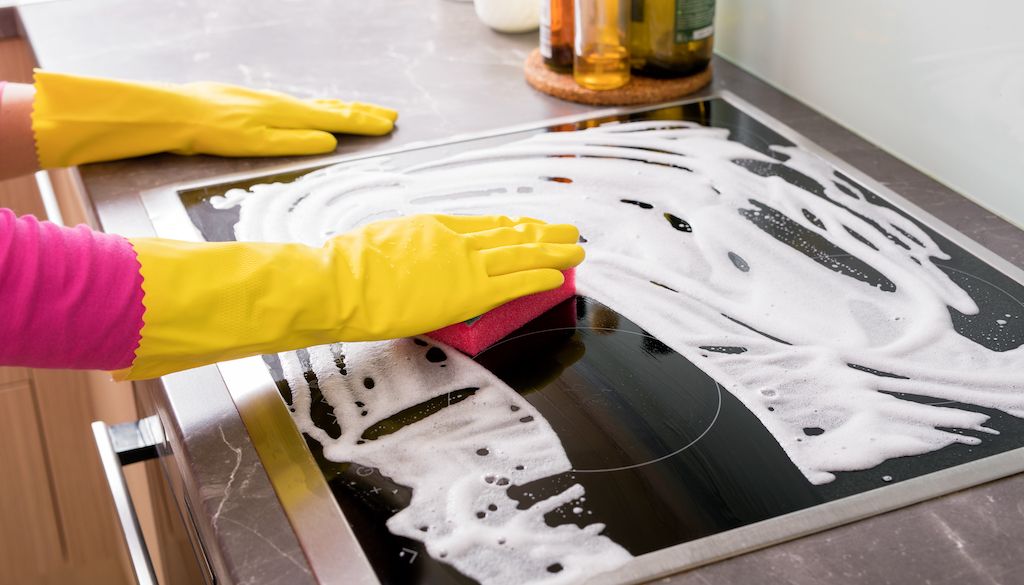
It's important to clean your stove regularly to prevent germs from spreading, bad odors, and even kitchen fires. But if you have a glass-ceramic stove top, it requires some special care compared to cleaning other types of stoves.
Prevent scratching and keep your cooktop looking brand-new by following these steps for cleaning a glass-top stove.
What you’ll need
- Two microfiber cloths — one for cleaning, one for polishing (you can also use the soft side of a sponge)
- Spray bottle
- Cooktop scraper made for glass-ceramic surfaces
- Stove cleaner (mild dish soap and baking soda, or a specialized cooktop cleaner for glass stoves)
- Oven mitt
Pro tip: Your stove manufacturer may also sell specialized scraping tools for deep cleans that won’t scratch the surface.
Things to avoid using on your glass stove
Don't use any of the following materials when cleaning glass surfaces, including your glass cooktop:
- Abrasive powder cleansers
- Ammonia
- Brushes with steel bristles and other ferrous scrubbing brushes
- Chlorine bleach
- Rust removers
- Paper towels (they shed lint and leave streaks rather than scratching — microfiber gives a cleaner result)
- Steel wool
Remember: Glass-ceramic cooktops are tougher than they look — they're engineered to handle high heat and resist scratching, so you don't need to treat the surface as fragile. However, abrasive powders and steel wool dull the finish, grit dragged under a pan leaves fine scratches, a dropped pot can crack the glass, and sugary spills can pit it if they cool on the surface. Gentle tools and the right cleanser avoid all four.
Step 1: Clear the surface.
Take all pans, pots, and utensils off the cooktop. Anything still on a burner will hold heat and keep the surface hot, and it's easy to knock into a hot pan handle while you're working.
Lift each item straight off rather than dragging it. Grit trapped underneath a pan is the most common cause of scratches on a glass cooktop.
Step 2: Wait for the stove to cool
Don't clean a warm cooktop — you'll burn your hands, and cleaners can bake onto the surface and streak. Look for the hot-surface indicator light, which stays lit until the glass is safe to touch.
One exception: if you've spilled something sugary — syrup, jam, melted candy — manufacturers recommend removing it while the cooktop is still warm. Sugar can permanently pit glass-ceramic as it cools and hardens. Use an oven mitt and your cooktop scraper, work carefully, and save the full clean for once it's cooled.
Step 3: Assemble the cleaning solution
Unless you’re using an already prepared glass stove cleaning solution, you have a couple of options for making your own:
- Option 1: Mix a few drops of mild dish soap into warm water and pour it into a spray bottle.
- Option 2: Set out baking soda and a bowl of hot, soapy water.
Step 4: Clean the stove
Once your stove has completely cooled and you’ve removed everything from the surface, you’re ready to clean.
If there’s residue on the stove, start by scraping the cooktop with a glass stove scraper to remove it. Place the scraper flat against the surface as you scrape. Remember, only use a scraper from a glass stove manufacturer so you avoid scratching the glass.
Depending on what type of solution you’re using, there are different methods to clean a glass stove:
- If you’re using a glass stove cleaner, follow the directions for how to use it. Generally, you’ll want to apply the glass cleaner solution to the stove surface and let it sit for about 10 to 15 minutes. Grab your microfiber cloth to wipe it off. Wipe it off in a circular motion.
- If you're using baking soda, sprinkle it over the cooktop, then lay a hot, soapy towel over the whole surface and leave it for 15 minutes. The heat and moisture soften baked-on residue while the baking soda works on the grease. Lift the towel, wipe in circular motions with a damp microfiber cloth, and repeat if needed.
- If you’re using a diluted dish detergent mixture, spray the surface with the cleaner. Then, apply a soft cloth in circular motions to wipe off the solution.
Repeat the process as needed if you don’t get the stove top completely clean the first time.
Step 5: Polish the stove
Once you’ve cleaned the glass stove, use another dry microfiber cloth to buff and polish the glass surface until it gleams.
Best practices for cleaning glass stoves
When cleaning your glass cooktop, keep these tips in mind:
- Clean frequently. The best way to prevent dirt buildup and grime on a glass stove is to clean it after each use. Cleaning becomes easier and more effective when you maintain your glass stove daily. As soon as your stove is completely cooled, follow the steps above to clean it after each use.
- Wipe up spills immediately. If the stove is dirty from milk, syrup, sugar, or tomato products, clean those right away so they don't harden or stain.
- Always read the manufacturer’s instructions before cleaning your glass stove top. Your manufacturer may have specialized cleaning directions, as well as tools and products that are recommended for that specific model.
- Keep an eye out for white marks or scratches. If you notice any, keep in mind they’re likely due to incorrect cleaning tools, products, or methods you've used in the past.
- Wash the microfiber cloth after each use. Prevent the spread of germs by only using clean cloths when cleaning your kitchen appliances.
- Remove hard water spots and white mineral marks while you're cleaning. Dampen a clean microfiber cloth with equal parts white vinegar and water, wipe the affected area, then follow with a cloth dampened in plain water and buff dry.
Need help with this project? Download the Thumbtack app
Now you know how to clean a glass stove top. However, if you need more help with cleaning, your stove has become damaged, or you need someone to perform repairs, Thumbtack can help.
Download the Thumbtack app to find top-rated professionals near you, including appliance repair technicians, house cleaners, handymen, and more.
How it works.

Search.
Browse profiles, see prices and use filters to find pros who match your project.

Chat.
Contact the pros you like to discuss project details.

Hire.
Check pro availability and book appointments right in the app.
Find local pros for your project
Tell us what you're looking for and we'll show you pros right for the job, with prices.