How to clean a vacuum filter
By Evan Crowther•Last updated Aug 14, 2023
Last updated Aug 14, 2023
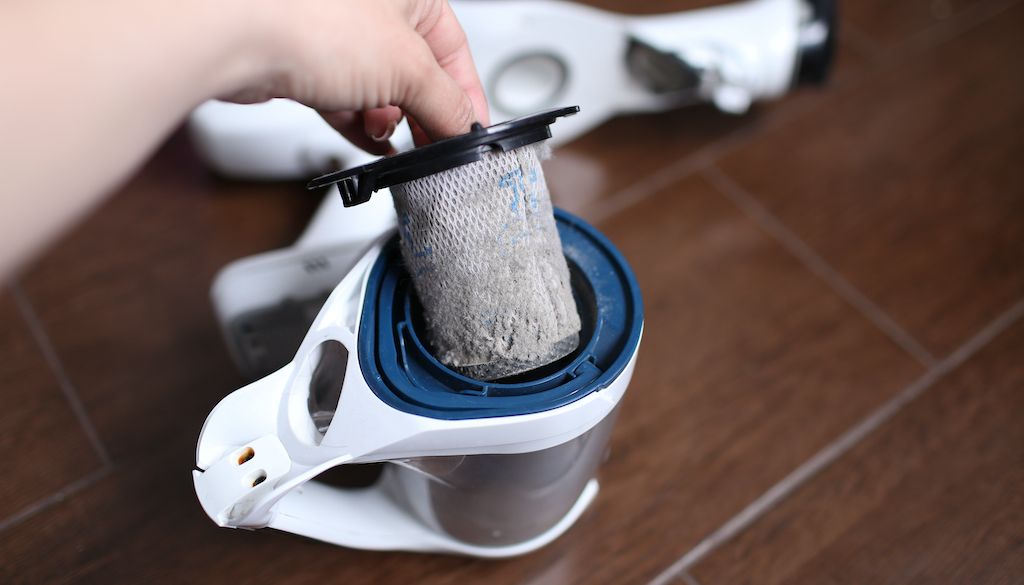
Your vacuum cleaner is an essential home appliance for keeping your floors free of dirt and dust particles. Over time and prolonged use, however, your vacuum’s suction power can decline. One of the most common causes of a temporary loss of suction is a dirty or clogged air filter.
In this guide, we’ll show you how to clean a vacuum filter. We'll also explain when it’s time to get a replacement filter.
A few things to know about vacuum filters.
Before you break down the process of cleaning your vacuum filter, take a closer look at the filter itself.
What are the different types of filters?
Different vacuums use different air-filtering methods. Some of the most common vacuum filters include:
- Cartridge filters. Removable cartridges made with cloth or a pleated, paper-like material.
- Foam filters. A spongy material that catches fine debris that passes through a primary filter.
- HEPA filters. High-efficiency particulate air filters have a dense mesh that lets air pass through, but not most dust particles, dander, and allergens. According to the EPA, this type of filter can "remove at least 99.97% of dust, pollen, mold, bacteria, and any airborne particles with a size of 0.3 microns (µm)."
Where is the filter located in a vacuum?
Where the filter is located depends on the type and model of vacuum you have. Most commonly, you’ll find the filter above or below the dirt container. Some vacuums use a bag, while others use a plastic bin.
How often should you clean your vacuum filter?
How often you should clean your filter depends on a few factors, such as:
- How often you use your vacuum
- How much debris ends up on your floors
- The type of filter your vacuum uses
Generally, you can expect to clean your filter every one to three months.
How to clean vacuum HEPA filters.
In most cases, you should replace a dirty HEPA filter rather than try to clean it. Cleaning it can damage the fibers.
Although cleaning a HEPA filter is usually impossible, some charcoal filters specify that you can gently rinse them. Only attempt to clean a HEPA filter if the manual specifically says you can.
1. Gather the necessary items. To clean a washable HEPA vacuum filter, you’ll need the following:
- A sink with warm water
- A wastebasket
- A towel
2. Remove the HEPA filter. Check your vacuum’s user manual for specific instructions on removing the filter.
3. Gently tap the filter. Over a wastebasket, tap the filter to shake out any loose dust or debris.
4. Rinse the filter. If the manual permits, rinse the filter in the sink using warm water. Make sure the water runs through the fibers and doesn’t get trapped in the filter.
5. Dry thoroughly. Place the filter on a clean towel and let it air dry completely before reinserting it.
How to clean cartridge filters.
Most cartridge filters are disposable. However, you can remove a lot of the dirt and dust they catch several times before they need replacing.
1. Gather the necessary items. To clean a cartridge filter, you’ll need the following:
- A sink with warm water
- A soft scrub brush or old toothbrush
- A wastebasket
- A drying rack
2. Remove the cartridge filter. Refer to your vacuum’s manual for specific instructions on locating and removing the filter.
3. Shake out the filter. Gently tap the filter against a wastebasket to shake out loose debris. More dust will usually come out of a cartridge filter at this stage than a HEPA filter, so it may take a while.
4. Rinse the filter. Rinse the cloth filter under warm water, unless the manual prohibits rinsing.
5. Scrub off any remaining debris. Using the scrub brush, gently brush away any dust remaining on the filter.
6. Air dry the filter. Place the filter on a drying rack to air dry. If you use a towel, avoid crushing the filter.
How to clean foam filters.
Foam filters are less delicate than HEPA and cartridge filters and can withstand more aggressive cleaning methods. You can usually wash them thoroughly and reuse them many times before they need replacing.
If you notice a significant loss of suction even after cleaning, it’s time to order replacement filters.
1. Gather the necessary items. To clean a foam filter, you’ll need the following:
- Warm water
- A sink or large bowl
- Mild soap or detergent (Check your owner's manual. Some manufacturers may advise against using soap for foam or felt filters.)
2. Fill a bowl or sink with warm, soapy water. If your vacuum’s manual says to avoid soap, use only warm water.
3. Remove the filter. Locate the filter, most often above the dust collection bin. Lift it out of the vacuum.
4. Wash the filter. Place the filter in the water and gently squeeze out the accumulated dust and dirt. You may need to replace the water several times.
5. Air dry the filter. Squeeze out any excess water. Place the filter on a clean towel to air dry before reinstalling it in your vacuum.
Cleaning instructions for vacuum filters by brand.
You can find instructions for your specific filter depending on the manufacturer and brand. Check out these resources for more personalized help:
Find pros who can repair your vacuum.
If cleaning the filter doesn’t fix your vacuum’s loss of suction, you may need to hire a pro. A vacuum repair technician can help get your vacuum back in working order.
With Thumbtack, you can quickly compare top-rated pros and get free price estimates. Download the app today and start your next project.
FAQs.
Can you clean a vacuum cartridge filter with water?
Refer to your manual for specific cleaning instructions. Generally, if your cartridge filter is made of cloth, you can use water. Avoid water for paper filters.
Can you wash and reuse vacuum filters?
Most vacuum filters are disposable. However, you can usually extend the lifespan of filters by cleaning out the dust and debris they catch.
Can you clean foam air filters with soap and water?
Most foam filters can be thoroughly washed in water. A mild soap is usually safe for foam, but check your vacuum’s manual for washing guidelines.
How it works.

Search.
Browse profiles, see prices and use filters to find pros who match your project.

Chat.
Contact the pros you like to discuss project details.

Hire.
Check pro availability and book appointments right in the app.
Find local pros for your project
Tell us what you're looking for and we'll show you pros right for the job, with prices.