How much do movers cost in San Francisco?
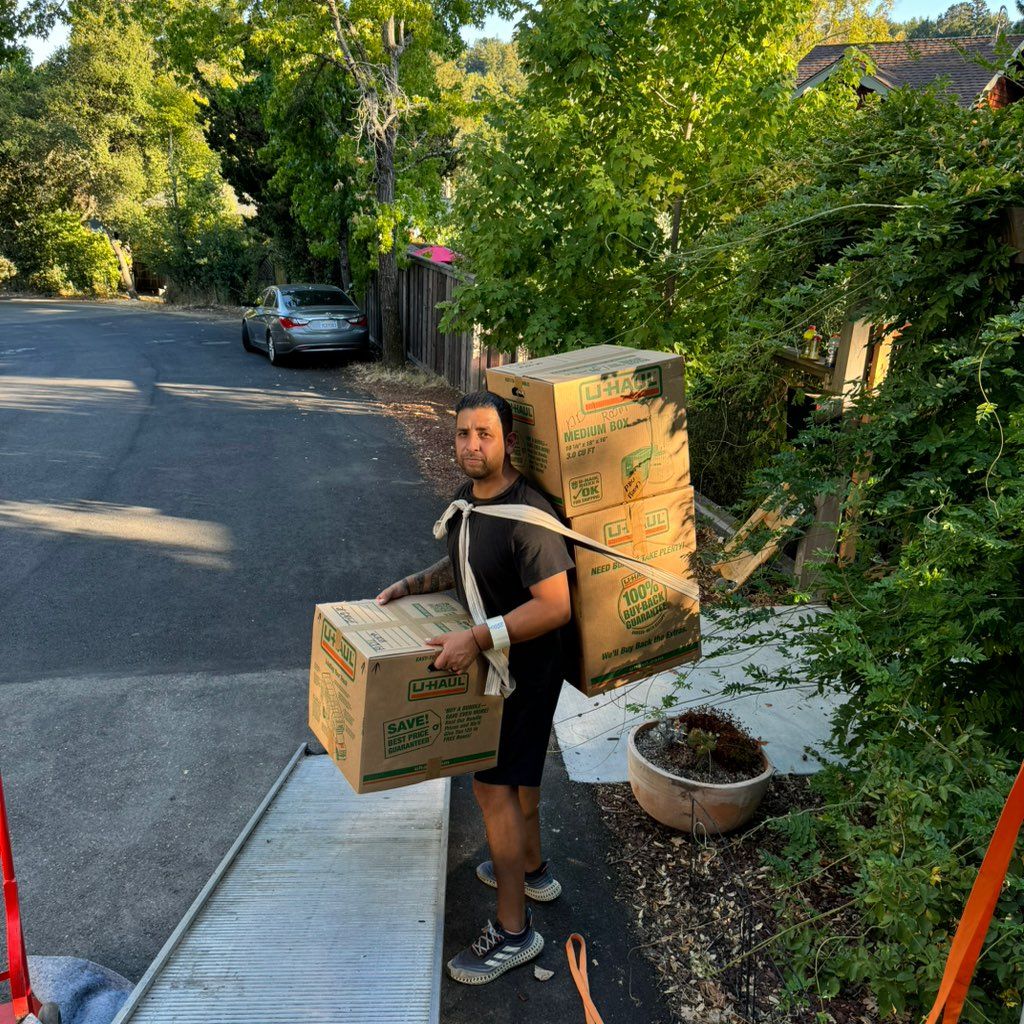
You might pay between approximately $80 to $140 for the top movers in San Francisco. However, your actual costs might be more (or less), depending on a few factors: where you’re moving to, how much stuff you need to move, how many movers you need to hire and the time of year.
How do I choose the best moving company in San Francisco?
Always read moving company reviews, and collect estimates to find the best movers in San Francisco. Moving companies in California are required to be licensed. According to the Office of the Attorney General, moving companies are required to be registered with either the California Public Utilities Commission or the U.S. Department of Transportation. You can find more tips on how to hire movers in Thumbtack’s smart hiring guide and look for the Top Pro badge to identify the best professionals near you.
Where can I get moving boxes in San Francisco?
Many businesses have moving boxes available for free pickup as long as you phone ahead. Check with your local pharmacy, grocery store, liquor store and bars for free moving boxes in San Francisco. Some people post their boxes for free on online bulletin boards once they’re done with the move. Of course, you can always shop at hardware stores for quality boxes or ask movers in San Francisco if they have boxes for sale.
Where can I rent a moving truck in San Francisco?
There are several moving truck rental companies located in the San Francisco area. But if you don’t want to deal with the hassle of renting your own truck, keep in mind that many moving companies in San Francisco provide their own trucks when helping you move. Depending on your situation, it might save you time (and money) to hire movers rather than move everything by yourself.
Do I need a parking permit for my moving truck in San Francisco?
Because of the limited amount of parking on the city’s steep and twisting streets, it’s highly recommended that you consider getting a parking permit for your move. A San Francisco parking permit can provide you with temporary no-parking signs to reserve space on the street for your truck. Contact your moving company beforehand to find out the size of the moving truck and how many spaces you will need.
How far in advance should I hire movers?
Book movers at least two months in advance for a local move and at least four months in advance for a cross-country move. If you’re moving during the off-season, it’s best to book movers about four to eight weeks in advance. Factor in an extra two to three weeks if you have antiques or valuables that are difficult to transport.
May through September is typically considered peak moving season. If you’re moving during this time, hire movers as far in advance as possible.
What is considered a local move in San Francisco?
A local move in San Francisco may include moves to cities like San Mateo, Oakland, Richmond, Alameda, Daly City. Local moving companies are a good choice for these areas. But if you’re moving to cities like Sacramento, Stockton, Fresno or Los Angeles, you may be better off getting in touch with companies who offer long-distance moving services, as they may be out of reach for short-distance movers.
Get in touch with the best movers in San Francisco to get help with your move and receive free estimates.
How much do you tip movers?
It’s recommended that you tip your movers individually around $4 to $5 per hour. For example, if a team of four movers spends a half-day (four hours) on your move, tip each mover $20. Or, some people tip 5% to 10% of their total bill for small moves and 15% to 20% for larger moves.
If you’re moving across state lines, you may hire different crews to load and unload your goods. In that case, divide the tips between both crews. It’s also a good rule of thumb to add a bit extra for tipping movers if you have special circumstances that have made the move harder, like a spiral staircase or an exceptionally heavy sofa.
What is considered a local move vs. a long-distance move?
Local moves are among the most common moves. Unlike a long-distance move, a local move is typically less than 50 miles and does not cross state lines. Generally, a local move only takes one day, and movers tend to charge by the hour.
The definition of a long-distance move may vary depending on the moving company. Generally, a long-distance considered to be any move of 400 miles or more. However, some say a long-distance move is over 50-100 miles.
|
Local Move |
A move under 50 miles |
|
Long-Distance Move |
A move over 50-100 miles or over 400 miles; may also be called an “interstate move” or “out-of-state move” |
|
Out-of-State Move |
A move that crosses state lines; may also be called an “interstate move” or “long-distance move” |
|
Interstate Move |
A move that crosses state lines; may also be called an “out-of-state move” or “long-distance move” |
|
Intrastate Move |
A move that begins and ends in the same state, typically beyond 50 miles |
Interstate moves require additional legal preparation and will incur additional costs for distance, the amount and weight of your items, the preparation required and various other factors. Moving companies tend to do an initial weighing of the truck, which you should be present for.
A move that crosses state lines is considered an interstate move or an out-of-state move. Contrast this with an intrastate move, which begins and ends in the same state, but is typically above 50 miles.
To determine whether your move is local or long-distance, contact the best movers in your area.
Should I buy moving insurance?
Your homeowners or renters insurance policy may or may not protect your belongings if they get lost or damaged during a move. If you’re moving valuable items, or if you’re moving a great distance, it could be a good idea to invest in moving insurance.
Interstate movers are required to offer you full value protection and released value protection to help reimburse you in case of damage or loss. If you’re moving within your state, check with your state’s consumer affairs agency to see if your state has rules and requirements regarding moving insurance and valuation coverage.