How to get melted plastic off of the stove, oven, and more
By Jordana Weiss•By Jordana Weiss•Last updated Oct 30, 2023
Last updated Oct 30, 2023
Key takeaways
- Protect your hands. Depending on the surface, you may want to wait for the plastic to cool, or you may need to act quickly. Melted plastic is hot and can stick to your skin. If you remove it while it’s still hot, protect your hands with heat-proof gloves.
- Keep plastic bags and cookware away from hot burners. If you get in the habit of setting cookware or plastic bags on them, you may forget they’re hot and melt the plastic.
- One approach won’t work for every surface. You may need to use WD-40, nail polish remover, baking soda, ice, and/or a razor blade scraper.
Are you in the middle of frantically trying to scrape melted plastic off your stovetop, kitchen countertop, or microwave? If so, slow down and take a breath. In this guide, we’ll walk you through how to get melted plastic off your stovetop, oven, and other kitchen surfaces.
Remove melted plastic from stove burners, grates, and drip pans
So, you’re cooking, and suddenly you smell burning plastic. If you realize you’ve accidentally melted a plastic bag or piece of plastic cookware onto your gas stovetop burner, grate, or drip pans, what do you do?
- First, turn off the burner in question. With a gas stovetop, wait until the plastic has cooled before removing it.
- Use a plastic bench scraper or even, very carefully, a razor blade to clean the melted plastic away. It should come off in large chunks.
- To finish, clean the gas stovetop — including the grates and drip pans — with warm, soapy water and a soft cloth.
Remove melted plastic from glass cooktops
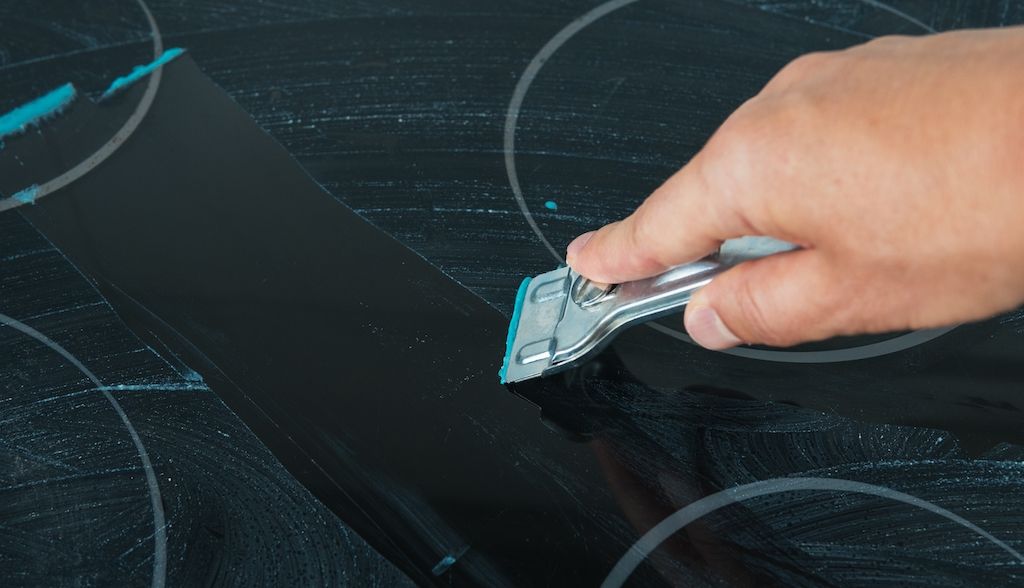
If you’ve melted plastic from a glass, bag, or Tupperware container onto your glass stovetop, don’t panic. On a glass stovetop, start working as quickly as you can. If the plastic cools, it could permanently damage your stovetop.
Follow these steps:
- Turn off the stove and put on heat-proof gloves.
- Use a razor blade or metal scraper to move the plastic to a cooler area of the cooktop. Wipe and scoop up the melted plastic with paper towels.
- After removing the visible plastic residue, clean your glass stovetop thoroughly with a cream ceramic cleaner.
- If there’s still hardened plastic on the cooktop, apply a little nail polish remover, WD-40, or a baking soda paste to the area. Let it sit for a few minutes before scraping it away.
Remove melted plastic from ovens
Did you make a mistake with a tray or pan inside your oven? If you have melted plastic inside your oven, do the following:
- Turn off the oven immediately and wait until the interior heating elements have cooled down.
- As you work, turn on your range or vent hood to help disperse toxic fumes.
- Freeze the plastic by placing a bag of ice on it. This makes it as brittle as possible.
- Use a razor blade scraper or plastic scraper to remove the melted plastic. For gas ovens, you may need to remove the bottom pan and perform this step outside the oven.
Remove melted plastic from the microwave
You should be extremely careful when using plastic implements or containers in your microwave. Anything not explicitly labeled “microwave-safe” can melt, leaving you with unpleasant melted plastic to clean up.
Here’s an easy way to get rid of melted plastic in your microwave:
- Microwave a cup of water, in a microwave-safe container, for several minutes until it’s boiled and the microwave is steamy.
- Leave it closed to let the steam loosen the plastic.
- Scrape it away carefully with your scraper.
Remove melted plastic from countertops
Because kitchen countertops are made from a variety of materials, you may need to vary your approach based on the type you have installed. However, for most materials, you should remove as much plastic as possible while it’s still warm. Follow these steps:
- Use heat-proof gloves and a razor blade to start. Remove as much of the plastic as possible.
- Place a bag of ice on the remaining melted plastic to get it as cold as possible.
- Scrape or chip away the hardened plastic.
- Finish by cleaning your countertop with a gentle baking soda mixture or a manufacturer-recommended cleaning product. That cleaner mixed with water should remove the last of the damage.
Note: For granite and marble countertops, avoid acidic and abrasive cleaners. Be careful not to scratch these surfaces, as well as stainless steel, when scraping away the plastic.
Find cleaning and repair services on Thumbtack
Fortunately, removing melted plastic from surfaces in your kitchen is an easy DIY project. However, if the plastic has melted onto a critical component of your microwave, stove, or oven, you may want to hire a repair professional.
Download the Thumbtack app and start comparing top-rated appliance repair pros near you today. You can also find local house cleaning services on the app. Consider scheduling a one-time or recurring cleaning to keep your home sparkling clean.
How it works.

Search.
Browse profiles, see prices and use filters to find pros who match your project.

Chat.
Contact the pros you like to discuss project details.

Hire.
Check pro availability and book appointments right in the app.
Find local pros for your project
Tell us what you're looking for and we'll show you pros right for the job, with prices.