Laminate vs. vinyl flooring comparison guide
By Daisy Heath-Abbott•Last updated Jan 18, 2023
Last updated Jan 18, 2023
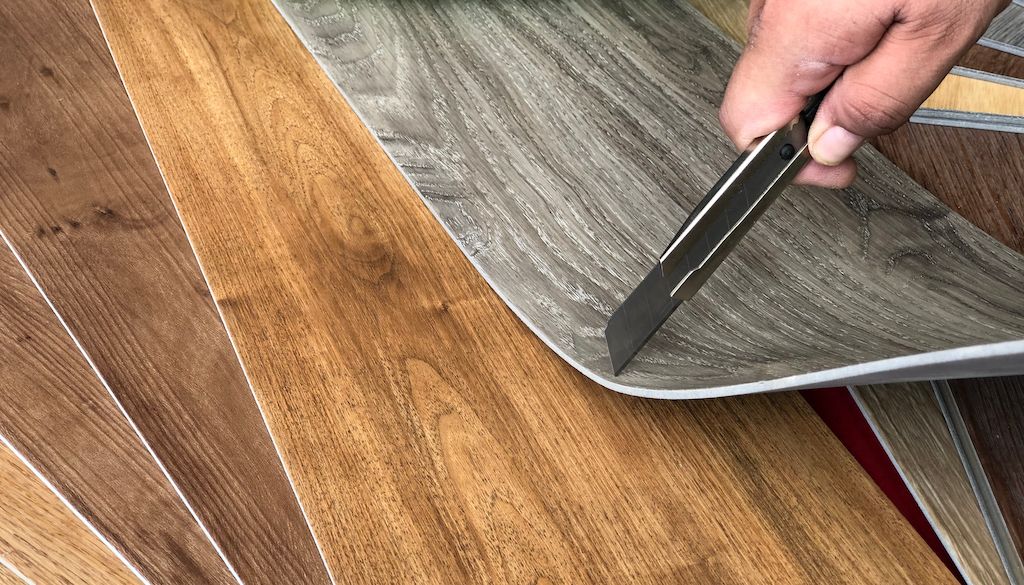
Thinking about replacing your floors but can’t decide between vinyl and laminate flooring? Keep reading to understand the difference between laminate and vinyl flooring so you can make the best choice for your home.
What is vinyl flooring?
Vinyl flooring is a practical, highly durable, and affordable floor covering. It is made up of several layers of different materials compressed together to form a stable, moisture-resistant, and hard-wearing product.
There are several types of vinyl flooring, including vinyl planks, sheets, and tiles. There’s also luxury vinyl. Luxury vinyl planks (LVP) can mimic the look of real wood and are thicker than sheet vinyl. Luxury vinyl also often contains a waterproof core.
Because it’s impervious to water, vinyl is one of the go-to materials for bathrooms, wet rooms, and laundry rooms. It can also last up to 25 years if properly cared for. As with many tiled products, installation and maintenance matter — if there are gaps between the planks or tiles, water or moisture can still seep through. This is why vinyl sheets can be better than tiled options, since they have fewer seams.
Vinyl flooring pros and cons
| Pros | Cons |
|---|---|
| Waterproof | Can be dented by heavy furniture and appliances |
| Long-lasting | Can produce toxic chemicals when burned |
| Easy to maintain | Vinyl sheets are not DIY-friendly |
| Affordable | Can look “cheap” up close |
| Large variety of colors and designs | |
| Vinyl tiles or planks are easy to install |
Where to install vinyl flooring: As vinyl is completely waterproof, it’s best suited for rooms that tend to get wet — bathrooms, kitchens, laundry rooms, and even basements.
What is laminate flooring?
Laminate flooring is a budget-friendly alternative to real wood. It mimics solid hardwood flooring with a low-cost wooden base layer topped by a layer that features an image of more expensive hardwood. This type of flooring is solid, durable, and works well in areas that receive high traffic, such as hallways or living rooms.
Many homeowners prefer laminate flooring because it is cost-effective, easy to install, and long-lasting, with a lifespan of about 15 to 25 years. However, it’s not well-suited for rooms that tend to get wet — like bathrooms, laundry rooms, and mudrooms.
Laminate flooring pros and cons
| Pros | Cons |
|---|---|
| Easy installation | Not waterproof |
| Budget-friendly | Can swell due to moisture |
| Easy to remove | Needs to be replaced when damaged (can’t be sanded like wood) |
| Long-lasting | Can look fake |
| Large variety of designs, styles, and colors available | A bit more difficult to clean than vinyl |
Where to install laminate flooring: Due to laminate’s versatility, it can be installed almost anywhere in the home — except for areas that are prone to moisture. Consider installing laminate in bedrooms, hallways, living rooms, and dining rooms.
Laminate vs. vinyl flooring — which one is better?
Vinyl flooring and laminate have many similar qualities — such as being easy to install, long-lasting, and cost-effective. They are increasingly becoming go-to flooring options for homeowners. However, some differences set them apart. Here’s a breakdown of how they compare in several categories to help you choose the right one for your home.
| Best for... | Vinyl or laminate? |
|---|---|
| Appearance | Laminate |
| Cleaning and maintenance | Vinyl |
| Comfort | Laminate |
| Cost | Tie |
| Durability and longevity | Vinyl |
| Pet-friendliness | Vinyl |
| Versatility | Vinyl |
| Water resistance | Vinyl |
Appearance and comfort
Winner: Laminate
Vinyl flooring offers a huge array of designs and colors. But laminate does a better job of mimicking the look of expensive hardwood flooring. If you want a more traditional, high-end feel for your floors, choose laminate instead of vinyl.
Cleaning and maintenance
Winner: Vinyl
Both laminate and vinyl flooring are easy to maintain and keep clean. However, laminate flooring doesn’t hold up as well against moisture, so you need to be careful when cleaning and maintaining it.
Laminate floors are best cleaned using dry methods with as little water as possible. Vinyl, if installed correctly, is 100% waterproof and can be dry mopped or wet mopped.
Comfort
Winner: Laminate
Laminate flooring is usually warmer than vinyl flooring. It’s recommended that you also install an underlayment to make laminate floors as comfortable and warm as possible.
Laminate vs. vinyl flooring cost
Winner: Tie (but vinyl may be more cost-effective over time)
There’s a wide range of costs for both laminate and vinyl flooring, and this will all depend on the design, quality, thickness, and material you choose.
Still, the two flooring options are generally comparable in price. But keep in mind that laminate has a greater chance of needing to be replaced when damaged. So, you may incur additional costs in the long run.
Durability and longevity
Winner: Vinyl
Vinyl wins here because of its ability to hold up against moisture. It also stands up well to scratches and stains. Vinyl has a lifespan of 25 years, while some laminate flooring will only last 15 years. Unlike laminate, vinyl also won't swell, warp, or contract — all of which can happen to laminate when it’s exposed to excess moisture.
Versatility in your home
Winner: Vinyl
Vinyl wins in this category too, and it’s not surprising considering it outperforms laminate in water resistance, durability, and longevity. Here’s a look at where you can install laminate and vinyl flooring in your home:
| Room | Vinyl or laminate? |
|---|---|
| Basement | Either (but consider vinyl if you don’t have a dry basement) |
| Bathroom | Vinyl |
| Bedroom | Either |
| Dining room | Either |
| Kitchen | Either (but consider vinyl if you tend to spill) |
| Laundry room | Vinyl |
| Living room | Either |
| Mudroom | Vinyl |
Water-resistance
Winner: Vinyl
The main difference between laminate and vinyl is that vinyl flooring stands up better against water and moisture. This quality, along with its durability, also makes vinyl a more pet-friendly option than laminate flooring.
How to choose between laminate and vinyl floors
The best thing you can do when deciding which flooring to pick is think about the room where you need the new flooring. Consider how the room is used and by whom. A room that will be used by children and pets will need a different approach than a room that doesn’t get much traffic, such as a study or home office.
For example, if you’re looking for new flooring for your bathroom, vinyl is a no-brainer — it’s waterproof and will last longer than laminate. However, if you want to add a luxury feel to your bedroom, hallway, dining room, or living room, then laminate is the best option. Its similarity to natural hardwood means you can add that luxurious feel at a fraction of the cost.
Who to hire to install your flooring
Both vinyl and laminate flooring have improved tremendously over the years. These products were once seen as a cheap alternative to natural hardwood, but they’re now becoming a strong contender for the real thing. If you’re ready to upgrade your flooring, use Thumbtack to find a flooring installation professional near you.
How it works.

Search.
Browse profiles, see prices and use filters to find pros who match your project.

Chat.
Contact the pros you like to discuss project details.

Hire.
Check pro availability and book appointments right in the app.
Find local pros for your project
Tell us what you're looking for and we'll show you pros right for the job, with prices.