How to clean a dishwasher with vinegar, baking soda, and other methods
By Maria Liberati•Last updated May 14, 2024
Last updated May 14, 2024
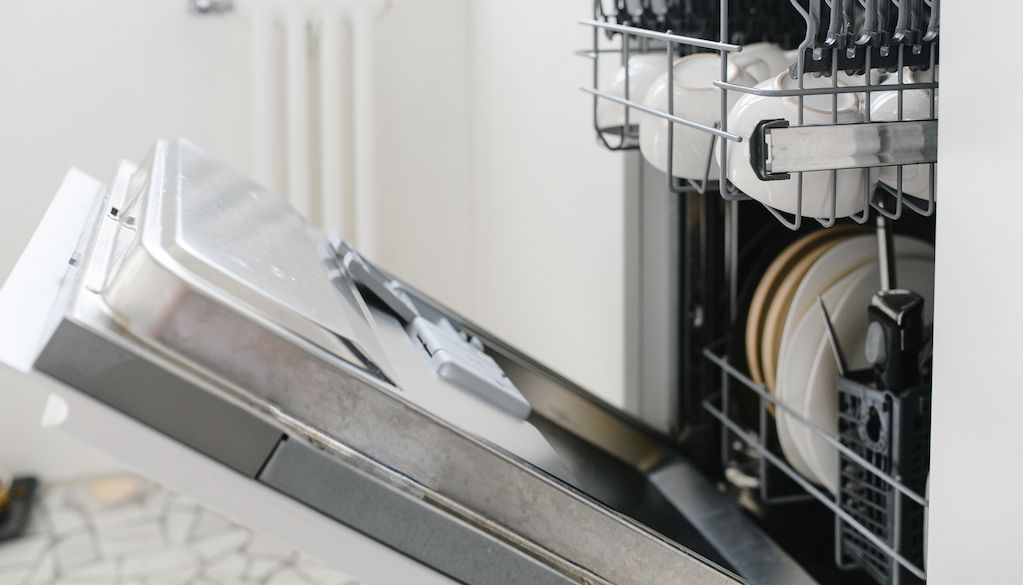
Most of us rely heavily on our dishwasher to keep our dishes and silverware clean. But how often do we think about actually cleaning the dishwasher? Although it’s one of the most-used kitchen appliances, it might be one of the most neglected when it comes to proper maintenance and regular cleaning.
Unfortunately, food and debris buildup can hurt your dishwasher’s performance. If you neglect this appliance for too long, it may even break down — which means you’ll need to spend money to buy and install a new dishwasher.
A thorough cleaning can make a huge impact. If you’re starting to see hazy, spotty or unclean dishes (or if you smell something funky coming from your dishwasher), it’s definitely time for a cleaning. Use this guide to get started.
How often should you clean your dishwasher?
Clean your dishwasher at least once a month, and clean your filter as often as possible. In fact, add it to your regular house cleaning schedule. Think of it this way: a dirty dishwasher can leave your dishes dirty and smelly. Cleaning it also helps you notice and identify potential dishwasher issues and repairs.
Although once-a-month cleanings are a good rule of thumb, you should also clean your dishwasher if you notice any of these signs:
- You see food particles in your dishwasher.
- Your dishes aren’t as clean as they used to be after a cycle.
- You notice a foul odor coming from your dishwasher.
What you can use to clean your dishwasher
- Dishwasher cleaning tablet
- Distilled white vinegar
- Baking soda
- Non-abrasive sponge
- Dish soap
- Soft bristle brush or toothbrush
- Soft cloth
- Gloves
How to clean and deodorize your dishwasher

So, how do you clean a dishwasher? Keep reading for our cleaning tips. These steps use all-natural substances like vinegar, but you can always use a dishwasher cleaning tablet instead. Just follow the instructions on the packaging.
Step 1: Read your owner’s manual
Dishwashers are similar, but not all are exactly the same. For safety, read your manual and familiarize yourself with the parts in your dishwasher. Some may be removable, while others may not be. Some also have specific removal methods.
Step 2: Unload the dishwasher and remove visible debris
Once you’re familiar with your dishwasher, unload any clean dishes, silverware and other items. Then remove any visible food debris. Look around your empty dishwasher carefully for bits of food and crumbs.
Finally, remove the bottom rack so you can access the filter or strainer.
Step 3: Clean your dishwasher filter
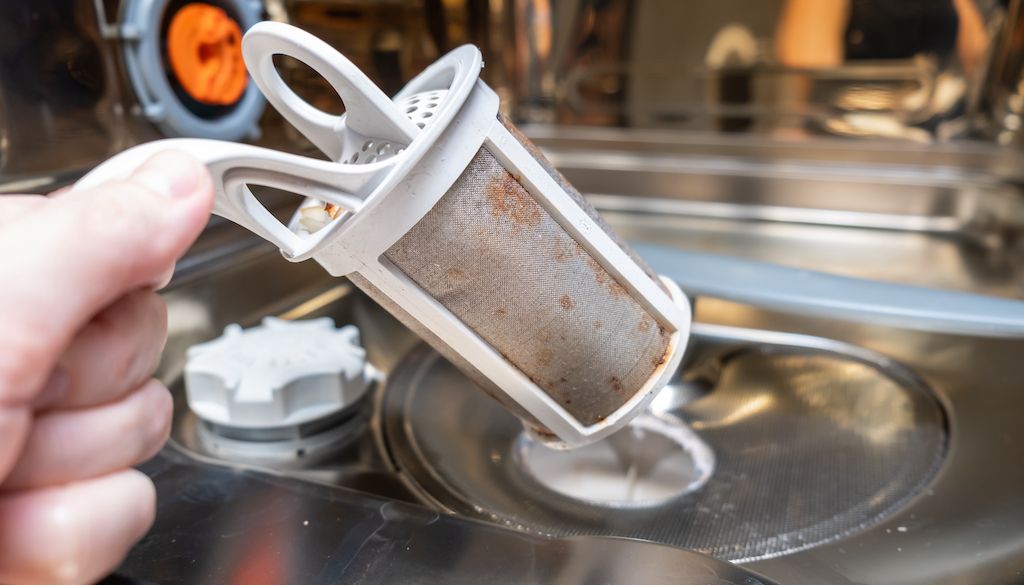
Your dishwasher filter is the cylinder-shaped plastic part in the bottom of the dishwasher. Check your manual if you can’t find it. Its job is to filter out food and debris so the water can drain properly. If the filter is clogged, it can clog your drain and leave your dishes dirty. Old food left in the dishwasher can also spoil and create foul odors.
Having a clean filter is important if you want spotless dishes. Here’s how to clean your dishwasher filter:
- With the bottom rack removed, you’ll have access to the filter. Twist and remove it carefully from its cavity in the dishwasher.
- Remove any food, paper labels and small bits from the strainer by hand and discard them.
- Use your soft brush or sponge and dish soap to clean the dishwasher filter. Don’t use a scouring pad or wire brush; both could damage the filter.
- Run the filter under warm water to rinse it thoroughly.
- Set the cleaned filter aside and get ready for the next step.
Note: Your dishwasher may have a self-cleaning filter, especially if it’s 10 years old or older. If so, consult your owner’s manual.
Step 4: Clean the cavity and replace the filter
With the filter temporarily removed, you can clean out the cavity. Before following these steps, consult your manual for any specific instructions on cleaning the filter cavity:
- Use a sponge or absorbent paper towel to remove any visible debris.
- Remove slimy mildew and grease with a sponge, paper towel, white vinegar or a small amount of dish soap.
- Secure the filter back into its cavity.
Step 5: Wipe the inside of the dishwasher
Wipe the inside of the dishwasher. Check once more for any food or debris, and remove everything.
Step 6: Clean your dishwasher with vinegar
Most of the manual work is done. Now it’s time for your dishwasher to handle the next couple of steps during the vinegar rinse. White vinegar can help dissolve mineral deposits, dirt, grease and grime. It also helps eliminate foul odors.
Here’s how to clean your dishwasher with vinegar:
- Return the bottom dish rack to its spot, and make sure the filter is back in its cavity.
- Pour 1-2 cups of white vinegar into a dishwasher-safe cup or bowl.
- Place the cup or bowl in the top rack of your dishwasher. Do not use detergent.
- Run a complete cycle. The vinegar will circulate through the dishwasher to eliminate dirt and smells.
Step 7: Clean your dishwasher with baking soda
Baking soda is a gentle abrasive. It helps remove any remaining grime, grease and mildew. Baking soda also helps remove odors from the dishwasher.
Here’s how to use baking soda to clean your dishwasher:
- After the vinegar cycle ends, remove the cup of vinegar.
- Sprinkle 1 cup of baking soda on the bottom of the dishwasher.
- Run a short hot water cycle.
Step 8: Clean the door seal and gasket

With the inside clean, it’s time to work our way out. Next up is the rubber door seal and gasket. This is also a place where food, debris and paper labels can become trapped. If food or debris are trapped here, mold and mildew can appear.
Make a mixture of ¼ cup of all-natural dish detergent and 1 cup of hot water. Using a sponge or cloth dipped in this mixture, thoroughly wipe the rubber gasket.
Next, wipe the area with a damp cloth dipped in hot water. Dry it with a soft cloth.
Step 9: Clean the control panel
It may seem unimportant, but the panel can become coated with bacteria and smudges. After all, we usually touch it after handling dirty dishes. For this cleaning task, a simple solution of white vinegar and water will suffice:
- Mix ¼ cup white vinegar with 1 cup of water. For ease, place this solution in a spray bottle.
- Spray the solution onto the surface.
- Using a non-abrasive cloth to avoid scratching the surface, wipe down the panel.
Step 10: Wipe down the door and exterior

Complete your cleaning by wiping down the exterior. If your dishwasher is stainless steel, use a non-abrasive cloth or microfiber cloth to wipe it down. You can also find products specifically designed to clean stainless steel appliances.
If there are smudges or dried liquid on the exterior, you can also dip your cloth in a solution of warm water and vinegar:
- Mix ¼ cup of white vinegar with 1 cup of water.
- Pour the solution into a spray bottle.
- Spray it on the dishwasher exterior and thoroughly wipe down the area with a soft cloth.
- Dry the surface with a clean, soft cloth.
How to keep your dishwasher clean for as long as possible
Developing a few maintenance habits and setting reminders can help keep your dishwasher clean and smelling good for as long as possible.
1. Scrape your dishes before loading them in the dishwasher
Do you treat your dishwasher as a garbage disposal and load dishes with dried food on them? Instead of treating it like a garbage disposal, treat it like a sanitizer. Don't leave large food pieces and debris on dishes for your dishwasher to handle.
Scrape and clear, but don’t rinse, your dishes before loading them into the dishwasher. This helps keep the filter clean and clear, preventing clogs and allowing clean water to circulate and drain properly.
2. Clean your filter frequently
Check your owner’s manual to see how often you should clean your filters. But it doesn’t hurt to inspect your filter weekly or bi-weekly and clear it of any visible debris.
3. Leave your dishwasher door open after a cycle
When the dishwasher cycle ends and you’ve unloaded the dishes, leave the dishwasher door open. This allows air to circulate and helps the dishwasher dry out completely. A dry dishwasher helps prevent mold and mildew from accumulating.
4. Regularly check your dishwasher's temperature settings
You’ll need to consult your manual for this step. Typically, you should set your dishwasher’s water temperature to 120°–150°F. If the water is too cool, it won’t break down the detergent or clean the dishes.
5. Load your dishwasher the right way
There’s an art to loading your dishwasher. When placing dishes on the racks, make sure you don’t block the spray arms. They should be able to rotate easily. And don’t stack your dishes on top of each other. Angle them so the water can drain properly.
Hire a pro on Thumbtack to maintain your kitchen appliances
In some cases, you’ll need a professional to help maintain, clean and repair your appliances, including your dishwasher. You can find local house cleaning services on Thumbtack. When contacting house cleaners, explain what type of cleaning services you need and ask if they can also clean your dishwasher.
And if you notice your dishwasher isn’t cleaning your dishes all the way, it may be time for a professional’s opinion. Use Thumbtack to find dishwasher repair services near you. They can inspect your dishwasher, fix it or help you decide if it’s time to replace your appliance.
FAQs
Can I clean my dishwasher with vinegar and baking soda? Is it safe?
Yes, you can clean your dishwasher with both vinegar and baking soda. As long as you don’t use too much of either ingredient, your dishwasher will be safe. Just follow Step 6 and Step 7 above to clean your dishwasher using both ingredients.
Is bleach or vinegar better for cleaning a dishwasher?
Vinegar is often the recommended cleaner for your dishwasher. That’s because bleach can damage stainless steel, a common material found in kitchen appliances.
However, bleach may be necessary if you need to get rid of mold or mildew. If your dishwasher doesn’t contain any stainless steel, in the interior or on the exterior, you can use bleach to clean your dishwasher.
How do I deep clean my dishwasher without vinegar?
You can use baking soda or a dishwasher cleaning tablet instead of vinegar to clean your dishwasher. Follow Step 7 to see how to use baking soda. If you’re using a cleaning tablet, follow the instructions on the packaging.
How do I get rid of black mold in my dishwasher?
If there’s black mold in your dishwasher or anywhere inside your home, it’s best to let a professional handle it. You can use Thumbtack to find and hire mold remediation services near you.
How it works.

Search.
Browse profiles, see prices and use filters to find pros who match your project.

Chat.
Contact the pros you like to discuss project details.

Hire.
Check pro availability and book appointments right in the app.
Find local pros for your project
Tell us what you're looking for and we'll show you pros right for the job, with prices.