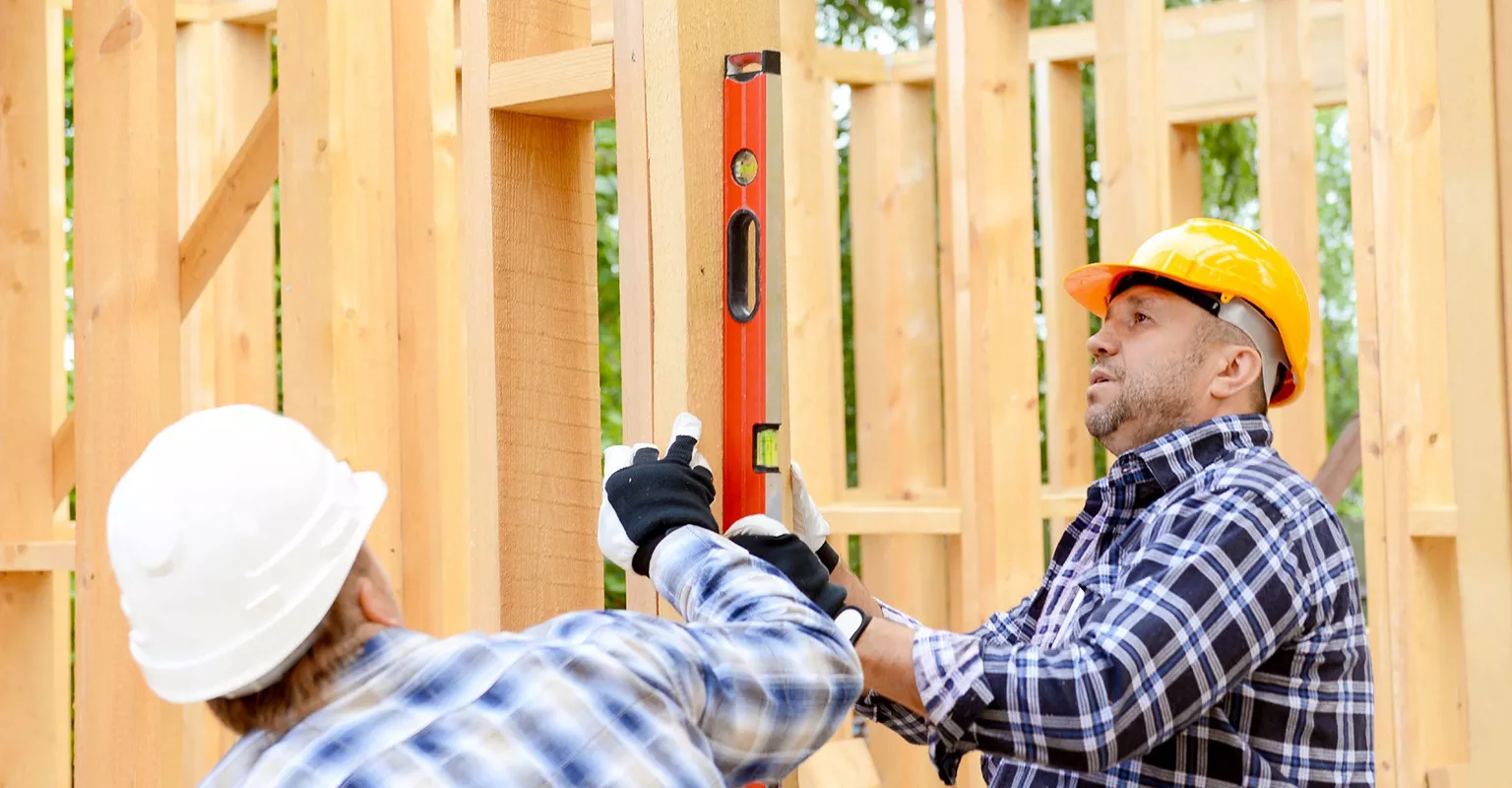
What is the process for framing a house?
Builders generally follow approved architectural drawings and help ensure all permits and inspections are in place. The process typically includes the following:
Prepare the foundation: Once the concrete foundation or slab is cured, sill plates are anchored to create a base for the framing.
Frame the floor system: Install floor joists, beams, and subflooring (for multi-story homes, this step repeats for each level).
Build exterior walls: Wall studs, headers, and openings for doors and windows are assembled and raised into position.
Frame interior walls: Partition walls are added to define rooms and hallways.
Install ceiling joists and roof structure: Roof trusses or rafters are set in place to form the roof framework.
Sheathing: Plywood or OSB panels are attached to exterior walls and the roof for structural support and weather protection.
Structural inspection: A building inspector reviews the framing before work continues.
Once framing is complete and approved, the home moves on to plumbing, electrical, HVAC, insulation, and exterior finishing.
How do I hire a house framing pro?
When looking for a professional framer, make sure you complete the following steps:
Verify their license and insurance: Most framers work under a general contractor license, but requirements vary by region. They should always carry general liability and workers’ compensation insurance to protect you from accidents on site.
Get several estimates: A proper estimate should be itemized, detailing the costs for labor, lumber, fasteners, and any necessary permits. It should also include a clear project timeline from start to finish.
Read their reviews: Look for comments that mention good communication, sticking to the budget and schedule, and passing inspections. Red flags include complaints about structural problems, failed inspections, or surprise costs.
Look at their portfolios: Check for photos of past framing work. You’ll want to see straight walls, clean job sites, and experience with projects similar in size and style to your own.
Find out if they have warranties: Ask about workmanship guarantees, which cover any defects in the installation or labor. This is separate from any warranties on the materials themselves.
Ask important questions: Before you hire, ask questions like, “Who is responsible for pulling permits?”, “How do you handle potential changes to the project or timeline?”, and “What is your daily cleanup process?”
When should you hire a house framing professional?
You should hire a professional house framer whenever structural work is involved, especially for new construction, additions, or major renovations. Framing directly affects the safety, stability, and code compliance of your home.
New home construction: Professional framing ensures the structure meets engineering plans and building codes.
Room additions or expansions: Proper integration with the existing structure is critical.
Removing load-bearing walls: Structural modifications require expert assessment and reinforcement.
Second-story additions: Added weight demands careful structural planning.
Complex roof designs: Vaulted ceilings, dormers, or custom trusses require precision.
Permit-required projects: Work that must pass inspection should be handled by experienced professionals.
While small non-structural projects may be manageable for experienced DIYers, most framing work benefits from professional expertise to help ensure long-term safety and durability.
What factors can impact the cost of a house framing project?
There are several factors that might impact the cost of this project, including:
Project size and design: A larger home or one with a complex layout, such as vaulted ceilings or multiple stories, generally requires more materials and labor.
Lumber: The price can change depending on the type of lumber you choose, such as standard wood vs. more expensive engineered beams for specific structural support.
Labor rates: The cost for a skilled framing crew can vary based on your location and the overall complexity of the job.
Site accessibility: If your property is on a steep slope or is difficult for crews and equipment to access, the job may be more involved and expensive.
Permits and inspections: The fees for required local building permits and subsequent inspections are typically factored into the total project price.
What can I expect during my framing consultation?
During your pro’s visit, they'll typically review your architectural plans and discuss the project's scope, whether it's for new construction or an addition. They’ll likely inspect the foundation, take precise measurements, and assess the site for material delivery and accessibility. This is also your chance to discuss material options, such as different types of lumber, and ask about the construction process. Based on this evaluation, your pro can provide a detailed timeline and a comprehensive quote for the job.
How do I prepare for a house framing job?
Before your framing pro arrives, take these steps to help ensure a safe and efficient appointment:
Step 1: Clear the work area. Remove any furniture, decorations, vehicles, or personal belongings from the construction zone to give your crew ample space to work safely and efficiently.
Step 2: Ensure a clear access path. Your pro will need to bring in heavy materials and equipment, so make sure there's an unobstructed path from the street or driveway to the work area.
Step 3: Plan for power access. Most framing tools require electricity, so confirm with your pro where they can plug in and ensure the outlets are accessible and functional.
Step 4: Protect adjacent spaces. Cover any nearby landscaping, flooring, or finished surfaces with tarps or plastic sheeting to shield them from dust, debris, and potential damage.
Step 5: Keep pets and children safe. For their safety and to prevent interruptions, make arrangements to keep pets and small children securely away from the work area throughout the project.