How much will your kitchen remodel cost?
Columbus, OH 43215
Kitchen remodels cost$28,696 - $90,397
National average fixed price
- Most common low price:$28,696
- Most common high price:$90,397
How much does a kitchen remodel cost?
By Evan Crowther
Last updated Tue, Aug 12
The national average kitchen remodel cost is $28,696-$90,397, including labor and materials, according to data provided to Thumbtack by Xactware. The total cost to remodel kitchens depends on the size of the kitchen, the materials and how extensive the remodel is.
At the lower end, a kitchen remodel costs between $23,058-$73,886, on average. However, Thumbtack's internal cost data shows that customers pay an average $3,122-$14,522, suggesting that many homeowners may be opting for budget-friendly kitchen remodels. More expensive remodels can cost an average of $36,028-$114,759.
Kitchen remodel cost:
| National average cost | $28,696-$90,397 |
|---|---|
| Average low-end cost range | $23,058-$73,886 |
| Average high-end cost range | $36,028-$114,759 |
The figures above represent the national average cost of remodeling a 144-square-foot kitchen of various layouts, including labor, materials, equipment, markups and market price fluctuations.
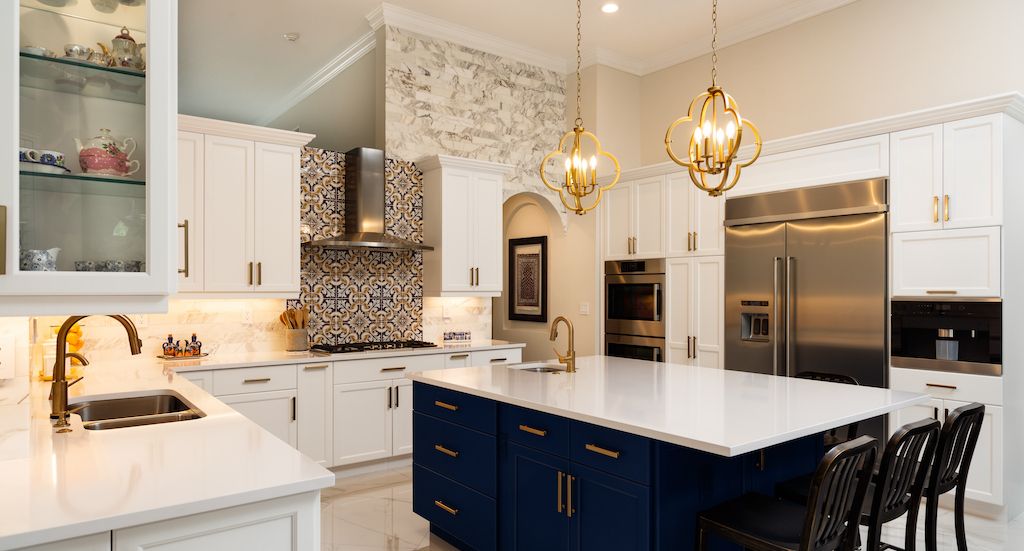
A lot goes into kitchen remodeling projects. And because every kitchen remodeling project is different, it's hard to estimate how much it will cost to revamp your kitchen. However, we've broken down the national average cost and provided some examples to help you with your research.
Keep reading to learn more about the factors that impact the cost of kitchen remodels. When you're ready, you can get free price quotes from local kitchen remodeling pros for a more accurate estimate.
Table of Contents
- Kitchen remodel cost:
- Kitchen remodel cost per square foot.
- How much does a small kitchen remodel cost?
- Kitchen remodel labor cost.
- Equipment and material costs for kitchen remodeling.
- Kitchen remodeling cost example.
- Factors that impact the cost of kitchen remodels.
- What is the most expensive part of a kitchen remodel?
- Budget-friendly kitchen remodeling ideas and ways to save.
- Are kitchen remodels worth it?
- Get free cost estimates from kitchen remodelers near you.
- FAQs.
Kitchen remodel cost per square foot.
| National average cost | $199-$628 |
|---|---|
| Average low-end cost range | $160-$513 |
| Average high-end cost range | $250-$797 |
The figures above represent the national average cost of remodeling a 144-square-foot kitchen of various layouts, including labor, materials, equipment, markups and market price fluctuations.
The national average cost per square foot to remodel a kitchen is $199-$628. However, the lower end of the price range is $160-$513 per square foot. More expensive projects will range from $250-$797 per square foot. Even with the same square footage, projects involving special light fixtures or custom cabinets will affect the total cost.
Your kitchen's square footage is one of the biggest determining factors that affect the total cost of your project. Larger kitchens will typically require more materials and labor, naturally increasing the total price.
Get a free estimate from a great Kitchen Remodel Contractor near you.
How much does a small kitchen remodel cost?
The average size of a kitchen is 161 square feet. For the purpose of this article, let's define a "small" kitchen as being 50-100 square feet.
Using the national average cost per square foot for kitchen remodeling ($199-$628), we can roughly estimate the cost of a small kitchen remodel below:
| Square feet | Estimated average cost |
|---|---|
| 50 | $9,950-$31,400 |
| 60 | $11,940-$37,680 |
| 70 | $13,930-$43,960 |
| 80 | $15,920-$50,240 |
| 90 | $17,910-$56,520 |
| 100 | $19,900-$62,800 |
The figures above represent the national average cost of remodeling a kitchen of various layouts, including labor, materials, equipment, markups and market price fluctuations.
A smaller kitchen will typically cost less to remodel than a larger one. With fewer square feet to cover, you can avoid spending a lot of time on stages like flooring.
With a smaller kitchen, however, it's crucial to make the most of the space you have. This can mean adding fixtures and cabinetry that can be more expensive.
Kitchen remodel labor cost.
| Description | Island or peninsula | National average labor cost |
|---|---|---|
| L shape | No | $9,667-$16,746 |
| L shape | Yes | $10,289-$17,606 |
| U shape | No | $11,574-$17,568 |
| U shape | Yes | $11,576-$20,230 |
The figures above represent the national average labor cost of remodeling a 144-square-foot kitchen. Figures do not include labor markups or market price fluctuations.
An L-shaped kitchen will cost $9,667-$16,746, on average, for labor without an island. With an island, an L-shaped kitchen remodel will have an average labor cost of $10,289-$17,606. U-shaped kitchen remodels have an average labor cost of $11,574-$17,568 without an island or $11,576-$20,230 with one.
Although some kitchens have the same square footage as others, they may differ in shape. Differently shaped kitchens come with different price tags for remodeling. Two of the most common kitchen shapes are L-shaped and U-shaped.
An L-shaped kitchen typically sits in the corner of an open floor plan and runs along two walls. The U-shape layout runs along three walls and is more common in spacious homes.
Equipment and material costs for kitchen remodeling.
| Description | Island or peninsula | National average material cost | National average equipment cost |
|---|---|---|---|
| L shape | No | $17,922-$43,543 | $577-$758 |
| L shape | Yes | $19,885-$46,207 | $577-$758 |
| U shape | No | $23,760-$52,382 | $577-$761 |
| U shape | Yes | $25,333-$68,967 | $577-$761 |
The figures above represent the national average equipment and material cost of remodeling a 144-square-foot kitchen. Figures do not include labor markups or market price fluctuations.
In addition to square footage and labor costs, factors like materials and equipment can affect the cost of remodeling a kitchen. Different woods and finishes vary in price, for example. Kitchen renovations requiring heavy or specialized equipment will also be more expensive.
Material costs are often on par with labor costs for kitchen remodeling. The contractor will use different materials for flooring, countertops and cabinetry. The materials for an L-shaped kitchen remodel cost $17,922-$43,543, on average, without an island. With an island, L-shaped kitchen remodel materials cost $19,885-$46,207.
U-shaped kitchens have a higher average material cost because they typically occupy more space than L-shaped layouts. Without an island, the materials for remodeling a U-shaped kitchen cost an average of $23,760-$52,382. With an island, the average cost of a kitchen remodel goes up to $25,333-$68,967.
Equipment costs will be a significantly smaller portion of your kitchen remodel budget than materials. These average costs start at $577.
Kitchen remodeling cost example.
| Description | National average cost |
|---|---|
| Pre-finished cabinets, laminate countertop, laminate flooring, standard/average grade appliances, double sink, 3 1/4" baseboards, and average grade light fixture. | $31,281 |
| Pre-finished cabinets, solid surface countertop/backsplash, engineered wood flooring, high-grade appliances, double sink, 4 1/4" baseboards, recessed lighting, high-grade light fixture, and pantry with shelving. | $44,051 |
| Pre-finished cabinets, granite or marble countertop, tile backsplash, premium tile flooring, high/premium grade appliances, double sink, 6" baseboards, recessed lighting, premium grade light fixtures, and pantry with shelving. | $65,010 |
The figures above represent the national average cost of remodeling a 144-square-foot L-shaped kitchen with an island. Costs include labor, materials, equipment, markups and market price fluctuations.
Compare prices from Kitchen Remodel Contractor near you.
Factors that impact the cost of kitchen remodels.
When setting a budget, consider how these factors play into the cost of your kitchen remodel:
Kitchen size and layout.
The size of your kitchen is often the foremost determining factor in the cost of remodeling. In general, larger kitchens require more materials and labor to remodel.
The shape of your kitchen will also affect the final cost of remodeling. If contractors have to work around an island, the project may take longer and cost more. In general, U-shaped kitchens cost more to remodel than L-shaped kitchens.
Features and finishes.
With so many factors to consider, the cost of remodeling a kitchen ranges widely depending on your chosen features. The quality of these features and fixtures will impact the total cost of the remodel:
- Cabinets
- Countertop material
- Kitchen islands
- Flooring
- Appliance grade
- Light fixtures
- Backsplash material
- Baseboard size and material
- Sink fixtures
- Painting
Appliance and material quality.
Higher-quality materials will increase the price of a kitchen remodel by a wide margin. For example, high-end countertop materials like granite and marble are usually more expensive than other options like laminate. Keep this especially in mind when choosing kitchen flooring and appliances, too.
Permit requirements.
Before you begin remodeling your kitchen, find out if your project requires any permits from local officials. Generally, cosmetic changes to a kitchen don't require a permit. Features that may require permits include adding rooms, plumbing or electrical wiring.
You can ask your contractor about the permitting process in your area, but you should also do your own research.
Project complexity.
Projects requiring more experienced workers may have higher labor costs. Some examples of complex remodeling projects include:
- Major structural changes
- Electrical and plumbing work
- Running gas lines
Location.
Where you live can affect the cost of a kitchen remodel as well. Labor costs will vary by state and region, and certain materials may cost more in different areas.
Additionally, the location of your home can affect how easy it is for contractors to access. If they have to make more trips to load equipment and materials, the project can take longer, increasing the cost.
What is the most expensive part of a kitchen remodel?
When you remodel a kitchen, plan to spend the most on your cabinets. Although you might overlook the cabinets, they're one of the most important aspects of the kitchen. They take up a large portion of your kitchen, after all.
Cabinetry takes years to master, so the labor cost can be higher than other facets of kitchen remodeling. The materials and finish you choose will also affect the cost of your cabinets.
Of course, other parts of your kitchen may cost more than your cabinets. Find out by getting price quotes from kitchen remodeling contractors near you.
Budget-friendly kitchen remodeling ideas and ways to save.
Remodeling a kitchen is an extensive home improvement project. For this costly undertaking, you'll want to take advantage of every opportunity to save money. Try using these strategies to stay within your budget for a kitchen remodel:
1. Use cost-effective materials.
Using high-end materials like marble countertops or exotic wood cabinetry may be tempting. However, you can often get equally appealing results with less expensive materials.
Laminate countertops can simulate the appearance of more expensive materials and are easy to maintain. You can also use a high-quality finish to improve the look of inexpensive wood.
2. Reface cabinets instead of replacing them.
Replacing the cabinets altogether can greatly increase the total cost of your kitchen remodel. Instead, you can often save money by having them refinished, refaced or repainted. As long as there aren't any mechanical issues with your cabinets, it probably isn't necessary to replace them.
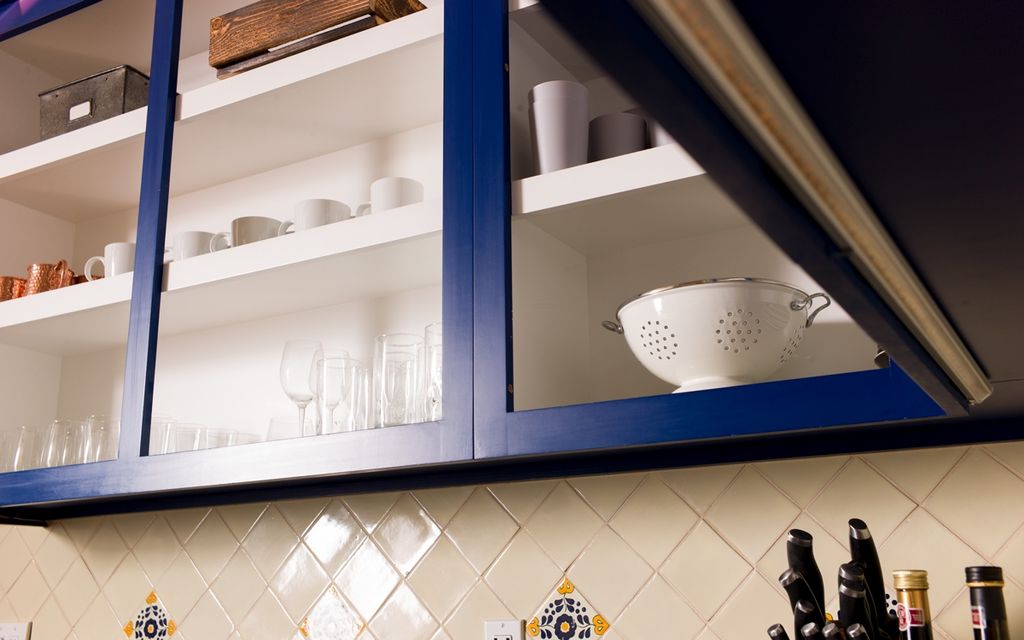
3. Install open shelving.
Instead of installing new cabinets, find out how much it costs to install open shelving. Shelves can be a budget-friendly way to add a functional and modern touch.
4. Do parts of the remodel yourself.?
Unless you're an experienced contractor, you should probably hire a professional. That said, there are some parts of remodeling a handy DIY enthusiast can take on themselves.
Consider painting the walls, installing a simple backsplash or replacing light fixtures by yourself.
Pro tip: Avoid doing any electrical, plumbing or structural work. Not only will a contractor get the job done more safely, but they'll most likely do it faster than you.
5. Make small cosmetic changes.
Sometimes, you can refresh your kitchen's look without spending a fortune. Consider making small cosmetic changes like updating the paint color, changing cabinet hardware or installing new light fixtures. These changes are fast and easy but can noticeably impact your kitchen.
6. Make a plan and stick to it.
Another way to save money on remodeling your kitchen is to create a detailed plan — and stick with it. Avoid making changes once the contractors start working. Doing so can push back your project and rack up more hours, increasing the total cost.
Find the right Kitchen Remodel Contractor for your project.
Are kitchen remodels worth it?
Kitchen remodeling is a big investment that you should consider carefully before starting. Weigh the pros and cons thoroughly to decide if it's the right time:
Pros:
- Increased home value: A remodeled kitchen can often get you a higher price if you decide to sell your home.
- Improved functionality: Remodeling your kitchen can make it better suited for cooking and dining.
- Visual appeal: New cabinetry, countertops and tiling can refresh your kitchen's look.
Cons:
- Cost: The high price tag can be a deterrent. Make sure you have the budget for this project.
- Disruption: Remodeling your kitchen can take 3-6 months. You may need to make other arrangements while you can't use your kitchen.
- No guaranteed return on investment: Although a kitchen remodel may increase a home's resale value, the housing market can be unstable. You may not see a monetary return on your investment if you pick the wrong fixtures or finishes. Make sure you consult a real estate professional when planning your kitchen remodel for the sole purpose of getting a return.
Get free cost estimates from kitchen remodelers near you.
It might be tempting to attempt to remodel your kitchen on your own to save money. However, remodeling is a complex task that you should leave to a professional.
Download the Thumbtack app today and start getting free estimates from top-rated professionals.
FAQs.
What adds value to a kitchen remodel?
Several features can make a kitchen remodeling project a better investment. A kitchen island is one of the most desirable features in a kitchen and can add substantial value to the remodel.
Another way to add value to your remodel is updated cabinets. Replaced or refinished cabinets can help make a home look new and increase resale value. You might also consider new appliances, which can modernize the kitchen and enhance your cooking experience. Replacing the countertops with a high-quality material can also breathe life into a kitchen.
How do you negotiate a kitchen remodel?
Before you start negotiating, you should set a budget and commit to it. Be sure to compare prices from multiple contractors. If contractors know you're shopping around, they may be more likely to negotiate on the price. Parts of the remodel you can negotiate usually include materials, labor and project timelines.
You can take advantage of a few other external factors in negotiations. During the winter months, when business is usually slower, you may be able to get a better price on kitchen remodeling. If you know someone who also needs their kitchen remodeled, perhaps you can also leverage a referral for a discount. It doesn't hurt to ask your pro about ways to save.
You can take advantage of a few other external factors in negotiations. During the winter months, when business is usually slower, you may be able to get a better price on kitchen remodeling. If you know someone who also needs their kitchen remodeled, perhaps you can also leverage a referral for a discount. It doesn't hurt to ask your pro about ways to save.
*The project cost estimates provided in this article were provided by Xactware’s pricing data. For more information, visit Xactware’s pricing methodology page.
How do we know these prices?
5m
Customers this year
300k+
Pros this year
20k
Projects a day
How it works.

Search.
Browse profiles, see prices and use filters to find pros who match your project.

Chat.
Contact the pros you like to discuss project details.

Hire.
Check pro availability and book appointments right in the app.
You might also like